
SEO optimization of the website for Google and other search engines? The ultimate guide

SEO optimization of the website for Google and other search engines? The ultimate guide

SEO optimization of the website for Google and other search engines? The ultimate guide

You have just learned about SEO and are wondering what SEO optimization of a website is? Or maybe you want to expand your knowledge?

This guide will provide you with all the information you need to enter the world of professional SEO website optimization for search engines. We know we are wrong when we say SEO optimization, but unfortunately most people who search and deal with SEO use this term.

Therefore, do not blame us in the continuation of this text.

SEO, or Search Engine Optimization, is the process of improving the visibility of a site on search engines such as Google, Bing and Yahoo (we have listed only the three most important search engines, but there are many more).

The goal is to increase organic (unpaid) traffic to the site by improving the position in the search results.

SEO optimization of a website involves various techniques and strategies that include technical optimization, creating quality content and building links.

SEO optimization of the website! Learn how to SEO optimize your website for Google. Find out how! Digital agency SmartThink

What isSEO OPTIMIZATIONwebsite ?

SEO stands for "Search Engine Optimization" or "optimization for search engines" and is a set of strategies and techniques aimed at improving the visibility of a site in the search results of search engines such as Google.

When we say search engine, we will always think of Google because its dominance is incredible.

In Serbia in 2024, Google occupies 83% of the search engine market, while the second is Bing with only 6%.

The main goal of SEO is to increase organic (unpaid) traffic to the site by improving its position on search engine results pages (SERP - Search Engine Results Page).

SEO optimization of a website is divided into two main categories:

On-Page SEO

This includes all activities performed directly on the site in order to improve its position on the search engines. This includes content optimization, meta tags, site structure, internal links and many other technical aspects

Off-Page SEO

This category includes all activities performed outside the site to improve its visibility and authority. The most important aspect of Off-Page SEO is building backlinks from other authoritative sites.

Why is SEO important?

SEO optimization of a website is important for the success of any site for several reasons:

SEO optimization of the website! Learn how to SEO optimize your website for Google. Find out how! Digital agency SmartThink

1. Increases Organic Traffic: Organic traffic is traffic that comes from unpaid search results. This means that visitors come to your site because they found it relevant to their queries.

SEO optimization increases the chances of your site appearing at the top of search results, thus increasing the number of visitors.

2. Improves visibility and reputation: A better position on search engines increases the visibility of your site.

Users tend to trust sites that are at the top of search results, which can significantly improve your brand's reputation.

3. Brings Qualified Visitors: SEO helps you target the right keywords that your target audience uses.

In this way, you attract visitors who are already interested in what you have to offer, which increases the chances of conversions.

4. Provides long-term results: Unlike paid campaigns that stop giving results as soon as you stop paying, the effects of SEO optimization are long-term.

Once you reach a good position, you can enjoy increased traffic for a long time with minimal maintenance costs

How does SEO optimization of a website work?

SEO optimization of a website includes various techniques and strategies that can be applied on a technical, content and marketing level.

Here are the main aspects of SEO:

- Keyword Research:

The first step in the SEO process is to identify the keywords that your target audience uses when searching. This includes competitor analysis, search volume and keyword relevance to your business.

- Content Optimization:

After identifying the keywords, it is necessary to optimize the content of the site or write completely new content. This includes the use of keywords in titles, meta descriptions, URLs, alt texts for images, as well as throughout the text itself on the site.

Quality and relevant content is key to SEO success. For the best results, use tools that process text according to the WDF IDF formula.

Our favorite is SEOlyze

- Technical optimization (Technical SEO):

Technical optimization means that your site is technically sound and that search engines can easily index it. This includes optimizing site speed, mobile optimization, using SSL certificates, creating XML sitemaps, and resolving duplicate content issues.

- Building backlinks:

Backlink building is the process of getting links from other sites to yours. These links help search engines understand the authority and relevance of your site. Quality backlinks from authoritative sites can significantly improve your position on search engines.

This is literally the most important thing you have to work on outside of your website.

When everything is finished on the website, this is the most logical continuation to strengthen your domain authority.

- Monitoring and Analytics:

SEO is a continuous process that requires constant monitoring and analysis. Tools like Google Analytics and Google Search Console allow you to monitor your site's performance, identify problems, and adjust your strategy.

Google even has a few changes during the day, but you should be careful when it comes to Core Updates because that's where the biggest shake-ups and changes happen.

We are witnessing that the changes in the first half of 2024 were turbulent for many niches, as never before (if we exclude Panda and Penguin Major Update)

Key elements of SEO

We will try to mention only the most important key elements of SEO, but we know there are many more.

That is why we will treat them separately in another text that we will publish on our blog.

For someone entering the SEO world, always keep these 4 elements in mind:

Meta tags

Meta tags such as Title Tag and Meta Description play an important role in SEO optimization. Never forget them! They provide search engines with basic information about the content of your page and affect the CTR (Click-Through Rate).

URL structure

URLs should be clean, short and descriptive. Using keywords in URLs can further improve your SEO strategy. Another very important item

User Experience (UX)

Search engines value sites that provide a good user experience. These include fast page loading, ease of navigation, mobile friendliness and quality content. Always make sure that your site displays well on mobile phones. For several years now, Google has been analyzing your website only based on how it is viewed on mobile devices

The best SEOtools

For a successful SEO strategy, it's important to use the right tools that can help you with keyword research, competitor analysis, performance monitoring, and technical problem identification.

Some of the most popular SEO tools include:

GA4

A tool for monitoring site traffic and analyzing user behavior. Every website should have one. It's free and easy to install

Google Search Console

A tool that helps track technical issues and analyze site performance on Google search. And he is a must! Like GA4, it is completely free and very easy to install.

Ahrefs

A tool for keyword research, backlink analysis, and competitor tracking. We'd say it's number one for analyzing backlinks. The downside is the price.

SEMrush

A comprehensive tool for keyword research, traffic analysis and competitor monitoring. Slightly weaker in the analysis of backlinks, but the best for the Balkan market.

Moz

A tool for analyzing backlinks, keyword research and tracking technical problems. It used to be much better, but still advises Ahrefs or SEMrush.

SEO optimization of a website is a complex and continuous process that requires dedication and professional knowledge.

Through the proper implementation of SEO strategies, you can significantly improve the visibility and performance of your site on search engines, attract more qualified visitors and increase the chances of conversions.

How do search engines work?

We will try to explain it to you very briefly, although in practice it does not seem so simple.

So let's go!

Search engines have two basic functions:

1. Searching and indexing: It involves searching and recording billions of web pages, documents, files, photos and videos on the Internet.

2. Providing answers: It means displaying the most relevant sites when the user is looking for something.

The process of searching and indexing

Search engines use special programs known as "bots" or "spiders" that automatically search the Internet. These bots follow links from one site to another and discover new sites to add to their databases.

When the bot finds a page, it analyzes its content and adds it to its index – a huge database with information about all found pages.

Displaying search results

When a user enters a query into a search engine, algorithms analyze the index to find the most relevant pages for that query.

Search results are ranked based on a number of factors, including content relevance, site authority, and user experience.

How people use search engines

Understanding how people use search engines is key to a successful SEO strategy. Users usually search for information, products or services through search engines.

Different types of inquiries can be classified into three basic categories:

1. Action queries: When a user wants to do something specific, such as buy a product or watch a movie.

2. Information queries: When the user needs specific information, such as the name of a restaurant or instructions for making something.

3. Navigation queries: When the user wants to visit a specific page, such as Facebook or the site of a specific car manufacturer.

Why is SEO optimization important for every website?

Website SEO optimization is essential because it allows search engines to understand your site's content and how it can be useful to users.

Although search engines are getting smarter, they still can't see and understand a web page the same way humans do.

Website SEO optimization helps search engines understand exactly what your website is about and how it can be useful for users. People make the mistake of thinking that good photos will improve SEO.

Maybe they will, but the truth is quite different. Google can't see your photo and you have to explain to it in text what is in it.

So never leave out the Alt Tag for any photo on your website!

Limitations of automatic browsers:

Online forms

Search engines are powerless when filling out online forms. Everything behind the form remains hidden from browsers

Duplicate content

Sites that use CMS often create duplicate versions of the same page, which can be a problem for search engines. pay particular attention to this

Blocked in code

Errors in the directives for recording the site (robots.txt) can lead to the complete blocking of access to search engines. Practically, you can be invisible without even realizing it

Bad link structure

If the link structure of a website is not understandable to search engines, they will not be able to find all the content on the site. This is important before starting to create a website

Content that is not text

Browsers have problems reading non-HTML text, such as Flash animations, photos, videos and audio. You have to understand that they "see" you only through text

What's going on behind the scenes at Google?

Search engines like Google, Bing and Yahoo play a key role in directing users to relevant information on the Internet.

To understand how SEO works, it's important to know how search engines work and what happens behind the scenes when we enter a query into a search engine.

Query types and their purpose

1. Transactional Queries: The goal of these queries is to perform a specific action, such as purchasing a product, downloading an application, or booking a service.

2. Informational Queries: Users are looking for information on a specific topic, for example, "how to make a cake" or "the history of Rome".

3. Navigational Queries: Users search for a specific site or page, for example, "Facebook Login" or "Amazon Store".

Browser limitations

1. Online Forms: Showing the form and how browsers can't access the content behind it.

2. Duplicate content: Examples of duplicate pages and how it confuses search engines.

3. Blocked in code: Display of robots.txt file with prohibited parts of the site.

4. Poor link structure: Visualization of poorly organized link structure.

5. Non-Text Content: Displaying different types of content that search engines cannot read.

Key factors for SEO success

In order for your SEO strategy to be successful, it is necessary to take into account several factors that affect the ranking of your site on search engines.

These factors include:

1. Quality of content: Quality, relevant and original content attracts users and increases the likelihood that your site will be ranked highly.

2. Keywords: Proper use of keywords in titles, meta descriptions, URLs and the text itself on the site helps search engines understand what your site is about.

3. Backlinks: Quality backlinks from other authoritative sites can significantly improve your site's ranking.

4. Technical Optimization: Site loading speed, mobile friendliness, SSL certificates and proper URL structure are important for technical optimization.

5. User experience: Good design, easy navigation and interactivity of the site affect how long users will stay on your site, which is a positive signal for search engines.

SEO is a continuous process that requires dedication, analysis and adjustment of strategies in order to achieve the best results.

By understanding how search engines work and applying the best SEO practices, you can significantly improve the visibility and performance of your site on search engines.

It requires a lot of work and at least 6 months of patience!

Basics of an SEO optimized website

Browsers are limited in how they search the web and collect its content. A website doesn't always look the same to us as it does to human beings and to the automatic search engines that analyze and record its content.

We will focus on specific, technical aspects of creating (or modifying) web pages so that they are identical to search engines and real visitors.

Content accessible to search engines

Your most important content should be in text format. Images, Flash animations, Javascript and other non-text content are often ignored or have little impact.

Therefore, do not attach any special importance to them from the SEO point of view.

The easiest way to ensure that the words and phrases you show your visitors are visible to search engines is to put them in the text of the page.

Advanced options to help search engines:

1. Alt attributes for photos

Photos should be assigned an "alt attribute" or alternative text that describes in more detail to search engines what is in the photo. That's the only way Google will understand your photo.

2. Website display check

Check how your site looks "in the eyes" of search engines with tools like SEO Browser. In this way, you will determine whether there are elements of the site that search engines do not see.

Availability of links

Links must be accessible to search engines so that they can move from one page to another and find all the content on the site. Hundreds of thousands of sites make the mistake of structuring their navigation in such a way that search engines cannot access all of the site's pages.

Don't let something like that happen to you!

Website structure and hierarchy

The basic structure and hierarchy of a site play a key role in its optimization for search engines. A well-organized site allows search engines to easily search and index all pages, while a poorly structured site can cause problems in indexing and ranking.

Website architecture is very important. Make sure that the customer can get to the product they want in no more than 3 clicks.

Planning the structure of the web site

Be aware of the following facts:

1. Clear hierarchy: It is important that your website has a clear hierarchy of pages. The home page should lead to the main categories, which further lead to subcategories or specific pages. This structure not only makes navigation easier for users, but also for search engines.

2. Use of URLs: URLs should be short, descriptive and contain keywords relevant to the content of the page. Avoid long and complicated URLs with lots of parameters. Nobody likes signs, not even Google!

3. Internal Links: Internal links help search engines discover and index new pages on your site. They also help users find related content more easily. We have noticed that a lot of websites do not attach importance to internal links, which are very important for Google to go through your website as well as possible and understand what you actually do.

Display of the optimal hierarchy of the site

These are some basic website options:

1. Homepage: The central point of navigation leading to the main categories.

2. Main categories: Sections that include related topics or products.

3. Subcategories and individual pages: Specific content within the main categories.

Using keywords for SEO

Keywords are the core of SEO strategy. They allow search engines to understand what your page is about and how to relate it to user queries.

The use of keywords must be carefully balanced - excessive use (keyword stuffing) can negatively affect the ranking of your site.

Therefore, make sure that the keywords for each page must be found in the following places:

1. Headings and subheadings: Use keywords in headings (H1 tag) and subheadings (H2, H3 tags). This helps search engines quickly understand the structure and main themes of your content. Each page may contain only one H1 tag. He should always be on top and the biggest. This does not apply to other H tags. It is important that they go in order and you must not skip them. For example, H2 must not be followed by H4, but necessarily by H3.

2. Meta Descriptions: Meta Descriptions (Meta Descriptions) do not directly affect the ranking, but they are still important for attracting users to click on your site in the search results. Include keywords and an attractive description to make it easier for users to click on your website. Check out how those on the front page wrote them to find out what the best rapping is.

3. Body text: It is natural to include keywords in the body text. Focus on creating quality and useful content that answers user queries. For advanced writers and website owners, we recommend using a tool that works according to the WDF IDF formula. You're not even aware of how many secondary keywords you've left out of your text.

4. Alt text for images: Adding alt text to images not only improves SEO but also site accessibility. Alt text should be short and describe the content of the image. It's actually the only way to explain to Google what's in your photo.

SEO optimization for mobile phones

An increasing number of users access the Internet via mobile devices, so site optimization for mobile devices has become necessary. Google uses "mobile first indexing", which means that the search engine primarily uses the mobile version of the site for indexing and ranking. Today, almost 2/3 of searches through Google Chrome are performed on mobile phones.

In fact, anyone who is serious about building websites pays a lot of attention to mobile first indexing. That is why it is important to take care of the following things to display the website on a mobile phone:

1. Responsive design: Your site should be responsive, which means that it automatically adapts to the screen size of the device the user is using. This is not a big problem for people who have experience in building websites.

2. Loading speed: Mobile users expect speed. Optimize images, reduce the number of scripts and use fast servers so that your site loads quickly on mobile devices. There are a lot of good online tools that can show you where the squeaks are.

3. Simple Navigation: Navigation should be simple and intuitive. Avoid complex menus and buttons that are hard to reach on smaller screens. Make sure everything runs smoothly and that users can easily get to the page or product they want.

Analytics and constant content improvement

SEO optimization of the website is not a one-time job.

It is a continuous process that requires regular monitoring and adjustment of strategies.

Using analytics tools, you can monitor your site's performance and identify areas for improvement.

GA4

This tool allows you to monitor how users move through your website, which pages they visit, how long they stay and where they come from. And countless other data and comparisons. You will see that it is amazing! No paid tool can give you a better picture of your website than GA4. Be sure of it!

Google Search Console (GSC)

It provides insight into how Google sees your site, including search performance, page indexing, and any errors that need to be corrected. It only shows organic results, unlike GA4. A lot of useful information, and at the same time very simple and easy to use. And totally free!

A/B Testing

Test different versions of content and designs to see what works best for your audience. Similar principle as in Google Ads, only much more extensive. We recommend it only to experienced players!

By regular monitoring and optimization, you can ensure that your site remains competitive and ranks well on search engines, attracting more relevant visitors and increasing conversions.

Because SEO optimization of the website is not something that is done once and never again. You must monitor and react to the changes that occur with each Core Update.

Trust us, it's no problem at all if you're a regular at it!

Selection of keywords for SEO

Seo optimization of the website

It all starts with the words entered in the search field. Keyword research is one of the most important activities when it comes to site optimization. Ranking for the right keywords can make all the difference in whether or not you exist online.

So the question is how to determine the value of the keyword?

In our opinion, the following three facts are important:

1. Relevance: Is the keyword relevant to the content of your page? Will the user find what he was looking for on your site?

2. Competition: How many sites are already competing for that keyword? Are there Google Ads ads above the search results?

3. Google Ads Campaigns: Create a Google Ads campaign to test keyword value and track impressions and conversions.

Long tail keywords

Long-tail keywords or phrases have a lower search volume, but can bring more conversions. For example, "black elegant men's shoes price" is more specific and more likely to generate sales than just "shoes".

For the keyword "shoes" there is certainly a big search and a lot of competition.

That's why we think that for such keywords it doesn't make sense to fight with much stronger websites than yours.

For "shoes" you do not know whether they are for children, women or men, whether they are sporty or elegant, what color the user is looking for, whether it is just an informative query, whether price or quality is important to him, etc.

And that's why this is your chance!

How does content affect the position on Google?

Search engines are constantly improving their processes to provide users with the best possible results. Quality content is key to any good search engine ranking.

You mustn't skimp here!

In this way, you not only help Google understand you better, but also provide users with a lot of useful information that they cannot find on other websites.

Quality content must have the following characteristics:

1. Clear navigation: The site should be easy to use and have clear navigation.

2. Relevant information: The content should provide direct and relevant information about the given search term.

3. Professional design: The site design should be professional and adapted to all browsers and resolutions. First of all, we think of mobile phones.

4. High-quality content: Content should be informative and useful for users. Without it, there is no success in the long run. Check out the best websites and you'll understand what we're talking about.

Impact of user experience (UX) on rankings

Google analyzes how users react when they visit your site. If users stay on the site, share the content and link to it, these are positive signals for Google.

We like to use Hotjar on our websites to analyze how visitors move through our pages.

Very useful app, be sure to try it! You will be surprised how some visitors view the pages on your website.

Customizing content for users and browsers

Quality content does not only mean providing information, but also adapting it to both users and search engines like Google. Content that is easy to understand and at the same time optimized for search engines allows for better visibility and a better user experience.

And that ultimately means a better position for you!

So the question is, what is important for content adaptability and relevance? We will be very brief.

According to us, they are:

1. Quality and originality:

Content must be original and of high quality. Plagiarism can not only lead to legal problems, but also negatively affects the site's ranking. Search engines prefer unique and informative content that provides value to users. If you copy some text, at best your page will be ignored by Google.

If they find out that you do it every day, someone can report you and you risk a manual penalty. Unlikely, but not impossible! A common practice by Google if it notices that you are buying backlinks.

2. Use of keywords:

The integration of keywords into the content must be natural and must not compromise the readability of the text. Keywords should be distributed evenly throughout the text, including headings, subheadings, and key sections of the text.

And here we advise the use of the SEOlyze tool, which is perfect in this situation. There are many other good WDF IDF tools, but as far as we know, only SEOlyze has an option in the Serbian language.

3. Content length:

Longer, more in-depth articles often rank better because they provide comprehensive information on a topic. However, length must not come at the expense of quality. The focus should be on informative and relevant content that satisfies the user's request.

In fact, no page should be less than 500 words. A little more important no less than 1,000 words, and the most important at least 2,000 words.

We know from experience that it is impossible to describe or explain something well with fewer words.

Engaging and retaining users on the website

Seo optimization of the website

User engagement is a key factor affecting SEO performance. Search engines track how long users spend on your site, how many pages they view and how often they return to your site. These metrics can significantly affect your position in search results.

That's why it's important to pay attention to the following:

1. Visual content:

The use of images, videos, infographics and other visual elements can increase user engagement. Visual content helps convey information better and can increase time spent on the site.

But in combination with a good text, the best results are achieved.

2. Interactive elements:

Surveys, quizzes, and comments allow users to actively participate on the site. These elements not only increase engagement, but also provide additional signals to search engines about the relevance and value of your content.

But not only to search engines, but also to users.

3. Regular content updates:

Constantly refreshing content and adding new information shows search engines that your site is active and up-to-date. Blog posts, news and updates are great ways to keep your content fresh.

This means a lot if you want to be successful in searches!

Technical Aspects of SEO optimization of the website

The technical aspects of SEO optimization of the website are just as important as the quality of the content. Without a technically optimized website, your quality content can go unnoticed by search engines.

1. Website loading speed: Loading speed is crucial for both users and search engines. A slow site can turn away visitors and negatively affect rankings. Image optimization, reducing the number of scripts and using fast servers are key to fast site loading.

2. Mobile Optimization: With the increase in the use of mobile devices, mobile optimization is essential. Sites that are not mobile-friendly can lose a significant number of visitors and have lower rankings. Take care of this!

3. Structure of URLs: URLs should be short, descriptive and contain keywords. Avoid complicated and long URLs with unnecessary parameters and characters.

Why does all this matter?

Search engines are becoming more sophisticated, but they are still limited in how they understand content.

SEO optimization of the website not only helps search engines index and rank your website properly, but also ensures that your content is useful and accessible to users.

By combining quality content, technical optimization, and user engagement strategies, you can significantly improve your search engine rankings, attract more visitors, and achieve better results.

SEO is an ongoing process that requires attention and adjustments, but the results can be extremely beneficial to the long-term success of your site.

Conclusion

SEO optimization of the website not only helps search engines index and rank your website properly, but also ensures that your content is useful and accessible to users.

is an indispensable tool for every website that wants to achieve success in the online world.

Through the thorough application of SEO techniques, your site can significantly improve its visibility on search engines like Google, attract more qualified visitors and increase conversion rates.

The process of SEO optimization includes various strategies such as keyword research, content optimization, technical optimization, building quality backlinks and continuous performance monitoring. All these techniques together contribute to achieving a better ranking of your site in search results, which is crucial for long-term success in digital marketing.

It is important to emphasize that SEO is not a one-time job, but a continuous process that requires constant attention, analysis and adjustment of strategies in accordance with the latest trends and changes in search engine algorithms.

In this sense, regular monitoring and optimization of site performance, using tools such as GA4 and Google Search Console, can help identify problems and adjust SEO strategies to achieve optimal results.

Digital agency SmartThink specializes in providing top SEO optimization of the website.

With our team of experts, who have rich experience and a deep understanding of the SEO process, we can help you improve your site and achieve better results on search engines.

Our approach is comprehensive, covering all aspects of SEO optimization of the website, from technical details to creating quality content and building authoritative backlinks.

It's up to you to tell us what you want, and we'll tell you how to make it happen!

We invite everyone who believes that we can help them achieve their goals in digital marketing to contact us.

Whether you want to increase organic traffic, improve your brand visibility or increase conversion rates, SmartThink is here to support and guide you through the entire seo optimization process.

Contact us today at info@smartthink.rs or call us at 063 221 770.

Find out how we can help your business grow and succeed in the digital world.

Your success is our goal, and we are dedicated to providing the highest quality SEO solutions that will bring you long-term results.

E-commerce website and how to create it in 10 steps?

E-commerce website and how to create it in 10 steps?

E-commerce website and how to create it in 10 steps? A guide for beginners who want an e-commerce website

Welcome to our guide, how to create an e-commerce website.

If you want to improve your business and take advantage of the growing trend of online sales, you are in the right place!

The e-commerce market is experiencing excellent growth and represents an incredible opportunity for all entrepreneurs throughout Serbia and the world.

According to the latest projections, revenues in the e-commerce sector in Serbia will reach an incredible 1,012 million US dollars in 2024. It is expected to grow at a compound annual growth rate (CAGR) of 10.52% from 2024 to 2029.

And that means the market value will reach an impressive $1,669 million by 2029.

The number of users in the e-commerce market is expected to grow to 2.7 million users by 2029. The share of users will be 33.8% in 2024, and it is expected to reach 41.4% by 2029. The average revenue per user (ARPU) will be around US$508.50.

Our goal is to provide you with a comprehensive and clear guide that will help you create a successful e-commerce site that will attract new users and increase your sales. Whether you are a beginner or an advanced user, our content is tailored to ease the process of creating and optimizing your online store.

Continue reading and find out all the key steps for creating a successful e-commerce website.

So let's get started:

Do you want an e-commerce website? Find out how to create and successfully run an online store. We will explain how to do it!

1. Choose and domain name

Web hosting is one of the key elements for accessing your business on the Internet.

Hosting stores all the files of your e-commerce store and allows visitors to access them.

However, with so many hosting companies available, finding a reliable provider can be challenging.

Although cheaper solutions may seem attractive, keep in mind that such providers can limit the overall capabilities of your e-commerce website.

Here are some factors to consider when choosing a hosting provider:

Availability guarantee (Uptime guarantee)

Frequent downtime is bad for e-commerce sites. In addition to negatively impacting search engine optimization (SEO), it can lead to lost sales and damage to brand credibility. Choose a hosting provider that offers at least a 99.9% uptime guarantee.

Speed & Optimization

Fast page loading helps improve user experience (UX) and site ranking. For optimal performance, choose web hosting with a server response time (SRT) of less than 200ms. Also, explore user reviews and CDN integration support

Bandwidth

It refers to the amount of data that a site can transmit to visitors in a certain period of time. The higher the bandwidth, the more traffic the site can handle. For optimal performance, check if your hosting provider offers unlimited bandwidth.

Storage

An e-commerce website should have enough space to accommodate content, including images and videos of products. Assess your needs properly so that your online store has enough room to grow

Security

Choose web hosting with a high level of protection to ensure the security of your site. Some of the important aspects include access management, SSL certificates, multi-layered firewalls, automatic backups and easy data recovery.

Simplicity of use

Although cPanel is very popular, some hosting providers offer custom control panels. That's why not all providers have cPanel. For example, some of them offer an intuitive control panel that makes it easy to manage your hosting account. But it's not the cPanel we're used to.

User Support

A good hosting provider provides 24/7 customer support so that your e-commerce website is always available. It can also offer an extensive knowledge base and other resources to help

2. Which hosting is best for a website?

After finding the perfect web hosting for your e-commerce project, it's time to decide on the type of hosting.

The four most common types of hosting are shared, VPS, cloud and WordPress hosting.

Here's a quick overview:

Do you want an e-commerce website? Find out how to create and successfully run an online store. We will explain how to do it!
  • Shared Hosting: Allows one server to host multiple sites. Because of its affordability and simplicity, shared hosting is great for e-commerce beginners.

  • VPS hosting: Uses virtualization to divide physical server resources into private resources. VPS hosting usually comes with root access, allowing server-level configuration. Best suited for tech-savvy business owners who need maximum flexibility.

  • Cloud hosting: It also divides a physical server into multiple virtual servers. Creates a network of virtual servers to store site files. Because of its robust processing power, high-traffic sites can rely on cloud hosting.

  • WordPress hosting: Choose this type of hosting if you want to create a WordPress e-commerce site. It comes with specific optimizations, such as a one-time WordPress installation, automatic updates, and a testing tool.

Once you have decided on the type of hosting, start choosing the perfect hosting plan for your e-commerce site.
Properly estimate the required resources in order to avoid a negative impact on the operation of your online store.

3. Come up with good names for your domain

Domain is another key requirement for an e-commerce website. It is the address that users type into their browsers to access your website.

A good, custom domain reflects the entire brand of your online store and helps establish credibility, setting you apart from the competition.

Here are some tips for creating a good domain for your e-commerce website:

- Short and clear

A short domain is more impressive and easier to remember. An ideal domain should be 15 characters or less.

- Without numbers and dashes

Avoid numbers and dashes to reduce the chance of typos and confusion, ensuring potential customers don't end up on the wrong page

- Always choose .rs

This extension also makes your e-commerce store look professional.

If you are thinking of having your business outside the borders of Serbia, then the best choice is .com

- Long-term thinking

Never add local details to your domain so as not to limit the growth of your online store.

- Check trademark protection

You can check all that on Google.

- Using a domain generator

It helps you come up with domain name ideas, which can speed up your brainstorming and domain name selection process.

Although you can purchase domains from any ICANN-accredited registrar, we recommend DreamWeb Hosting. You can do everything with them in one place. DreamWebhosting plans start from 4,260 dinars per year (SSD hosting), while the annual fee for the national domain .rs is 2,340 dinars. For the .com domain, the annual fee is RSD 1,980. These are the prices valid at the time of writing!

DreamWeb employees will help you simplify the process of developing your e-commerce site, because you won't have to worry about finding a hosting service and a domain registrar, because they offer both services in one place.

4. Choose the right e-commerce platform for your website

When creating an e-commerce website, you can choose to host it yourself or use a platform for creating e-commerce websites.

Self-hosting your site gives you full control, but it's expensive and requires a lot of time and knowledge. This means that you have to deal with site development, maintenance and security yourself.

If you are not technically skilled, you will need to hire a professional.

Alternatively, you can use a cloud-based e-commerce platform. For example, a platform like Wix for e-commerce, which makes it easy to set up your e-store. But you should know that a good e-commerce website on Wix is not cheap on an annual basis.

Therefore, if you plan to do online business for a long time, our advice is to create your own website or hire someone to do it for you.

Look for a platform that offers a simple website builder, as well as tools to manage different aspects of your business, from marketing and sales to inventory management and shipping.

Key features of an e-commerce web platform

When choosing a platform for your e-commerce website, consider the following key features:

  • Mobile-friendly: Choose a platform that offers responsive themes and templates, ensuring that your online store elements automatically adapt to different screen sizes. WordPress, namely Divi or Elementor, offer designer-made and mobile-responsive templates.

  • Security: The platform should offer fraud prevention measures, data backup and other security measures to keep your website and data protected. If you plan to accept credit or debit card payments, PCI compliance is a must.

  • Reliability: Every second of downtime can jeopardize sales on your website, so it's important to find a platform that has the infrastructure to handle any volume of traffic. Ideally, it should support unlimited scalability and prevent site crashes during periods of high traffic to your website.

  • Back-office tools: Choose a platform that supports all the major functions, applications and automations you need to grow your business. Consider inventory management tools, product listings, shipping solutions, ordering and other features.

  • Cross-channel sales opportunities: As your e-commerce business grows, you'll likely want to expand your reach with other marketplaces, social networks, and other channels. Choose a platform that allows you to manage your sales and marketing channels from a single dashboard.

There are many e-commerce platforms available, but we use and recommend a combination of WordPress, Divi or Elementor and WooCommerce.

With them, you can effectively manage all aspects of your business, improve customer experience and increase sales.

No worries that something won't work well!

5. Design yours e-commerce website

Your e-commerce website is the face of your brand, which means you want its design to be perfect from the start. The correct choice of design and template is crucial for strengthening the brand image and directing users to the right actions through e-commerce sales strategies.

We recommend WordPress as a platform, and Divi or Elementor as a builder. In the case of an e-commerce website, WooCommerce stands out as the right solution.

When choosing a theme, take into account the category of products you are selling - whether it is fashion, furniture, food or some other type of product.

Search the themes and templates offered by your e-commerce platform for inspiration. If you have no experience in creating websites, this can be a great solution.

The only drawback in this case is the necessary paid theme and Plugins.

Veštačka inteligencija za SEO i detaljno objašnjenje kako da je iskoristite za SEO optimizaciju. Naučite kako da budete ispred konkurencije!

Customizing e-commerce templates

After choosing a template for your e-commerce website, you can customize it according to your needs through the editor of your platform.

If you need help, you can hire a professional designer.

Here are some aspects to consider when designing your e-commerce website:

The images

It's best to use your own product photos, including those that aren't product-specific but serve as eye-catching header images, background images, or lifestyle photos. Be mindful of the size of each image so that each page loads as quickly as possible. In our opinion, Photoshop is the best for this, but if you don't have experience working with it, there are a lot of free tools that can do it for you completely free.

Fonts and colors

Select typography and colors that match your e-commerce brand. Check that the text is easy to read and that the buttons are easy to see. Be consistent in your design, considering how colors and patterns have the power to convey different moods, memories and values. Make sure that the fonts have all the letters that are used in the Serbian language.

Home page

Think about the most important information to provide on the home page (think of it like opening a physical store). Highlight the most important products, messages and/or offers on the home page. You can also embed posts from your Instagram or Facebook feeds or add product reviews that showcase your brand's authenticity

Keep your navigation clear and well-organized. As a general rule, visitors should be able to find any product they need in three clicks or less. Add site search, sorting options and filters to further help customers find what they need faster

The mobile experience

When setting up your e-commerce website, don't forget the mobile experience. Check that text, images, and buttons display properly on smaller screens like mobile phones and tablets

6. What are the important pages on every e-commerce website?

To attract and generate sales from your target audience, the information on the main pages of your site should be easily accessible and visible.

Here are some key pages that every e-commerce web shop owner should carefully develop.

"Landing page"

The home page is the first thing most customers see, so it should contain attractive and clear information about your site along with high-quality images and graphics.

It is important that the home page loads quickly. Most customers expect online store sites to load in 3 seconds or less. Otherwise, they might leave the website before they entered and never come back. Google also considers loading speed as one of the important ranking factors.

To reduce the size of the home page and improve its loading time, reduce the images before placing them. You can use compression tools, such as Kraken.io or Tiny PNG. Also, enable caching and clean up the code.

If you have experience, PhotoShop is irreplaceable!

Additionally, ensure that the home page is easy to navigate. One of the easiest ways is to provide product categories and a search function.

They help customers find what they are looking for faster.

"About Us"

The "About Us" page allows visitors to learn more about your brand's story and mission. In addition to providing information to online customers who have never heard of your brand, this site helps attract investors and partners.

In addition to a brief description of the company, you can include its background story, mission and values to set your business apart from the competition.

Introducing people to your company is also a great way to boost your "About Us" page.

This helps to humanize your brand, which allows for a more serious connection with visitors.

"Contact"

A contact information page allows customers to check the availability and reliability of your business. Make it easy for them to find your contact details such as phone number, email and physical address (if you have one or want to display it).

To improve your credibility, be accessible and transparent. Customers are likely to make a first or repeat purchase only if they trust your brand.

E-commerce websites can also use a contact form. By displaying a contact form, business owners can collect customer data to help generate and nurture leads.

"Frequently Asked Questions" (FAQ)

Buyers usually have many doubts about the buying process. The FAQ section can be of great help to all users of your website. Think about the most common customer issues or questions, such as shipping options, order tracking, or shipping countries.

In addition to detailed and useful answers, you can provide insight into the products and services of your business.

Also add a search bar to the FAQ page to make it easier for customers to find information.

"Privacy Policy"
Display your privacy policy in visible places such as menu, footer, login pages or checkout page.
In this case, we recommend hiring professional help when drafting the privacy policy to ensure its full compliance.
"Return and Exchange Policy"
A detailed exchange and return policy shows that the company stands behind the quality of its products and values its reputation. From the business owner's point of view, this policy helps to handle exchanges and returns more efficiently. Therefore, consider the following when creating a replacement and return policy.
For example:
  • List of items that cannot be returned or refunded.
  • Time frame in which we accept returns and refunds.
  • Acceptable condition of the item, for example, with an attached invoice or price list.
  • How customers can request a return or refund.
"Shopping cart and secure checkout process"
Customers like to know what they have added to their cart while browsing other items. Organize all items neatly and include important details such as product images and accurate prices. For transparency and if possible, show a clear sum of costs and estimated delivery time.
Make sure forms are easy to fill out to make future purchases as easy as possible for customers.
Checkout without customer registration is a great feature for improving conversions, as it allows anyone to make a purchase without first registering.
At the same time, in this way you reduce the time required for the order.
"Delivery Solution"
In addition to payment options, providing different shipping methods is essential. Include information such as taxes, estimated shipping time, and whether international shipping is available.
Think about which methods your customers may prefer. Real-time shipping costs are a great choice if your products vary significantly in size and weight. However, if they are similar in size and weight, consider offering a fixed shipping rate.
A great suggestion is free shipping over the amount you set as the minimum for free shipping.
"Call to Action" (CTA)
A clear and simple call to action (CTA) is an integral part of a site with good navigation. CTAs are texts, images and buttons that tell customers what to do next.
This can include the following pages - Sign up for the newsletter, Register an account and Add item to cart.
Use bright colors on the CTA buttons, as the choice of colors can significantly affect the conversion rate of the page.
For these things, never use red!
"Product Pages"
Product pages are crucial in the customer decision-making process. With e-commerce web stores, customers cannot hold, feel or try the product. Instead, it's all based on what they see in pictures and read on their devices.
This is why it is important to have professionally done images and provide complete and detailed product descriptions.
Covering all aspects of a product, including size, materials, uses and benefits can help customers make positive purchasing decisions.

7. Create product pages on your website

Product pages are critical to the success of your e-commerce website and should not be done lightly. If you create them correctly, you will not only drive sales, but also increase the chances of additional purchases through cross-sell and upsell strategies.

Be careful when creating product pages.

Think about the questions and assumptions customers may have when they can't physically see or touch your products.

That's why we're going to reveal to you what the key and essential elements of product pages are.

While creating product pages, pay attention to the following elements:

Product names

Product names should contain an easily recognizable description. For example, if you sell headphones, include the word "headphones" or "earbuds" to make the products easier to find

Product images

Add multiple high-quality images from different angles to give customers a complete overview of the product. Where appropriate and possible, use video or info graphics for additional context. If your products come in different colors or styles, include images of each variant

Product descriptions

Product descriptions should answer frequently asked questions. Include details such as material of construction and method of production. Highlight the benefits of your product, not just its features, and emphasize what makes your product unique. Include keywords naturally to improve your chances of high search engine rankings. This part is part of SEO techniques and is very important for search engines

Shipping and Return Information

Today's customers want as few clicks as possible, so including shipping costs and return policies on the product page helps create a more efficient user experience. Clearly displaying this information helps reduce misunderstandings and customer dissatisfaction

Product reviews

Include reviews on product pages by adding a widget or importing existing reviews from other sources. You can also display user-generated content, such as images of products in use, to further show authenticity

Opportunities for cross-sell and upsell

Add dynamic "related product" banners to draw attention to other products, accessories or components that may be of interest to your customers. As an additional option, offer premium product versions or product subscriptions

8. Don't forget the payment and delivery methods

Whether you integrate offline or online payment methods, setting up a secure way to accept payments is essential. Every e-commerce website must have SSL certificates to strengthen the security of your e-store.

A secure online store makes a good impression and ensures that your customers feel safe when transacting. Paying with cards like Visa or MasterCard will not only increase your sales, but also provide additional security to your customers.

Many e-commerce platforms offer built-in payment integrations. For example, WooCommerce has WooCommerce Payments.

And don't forget the value added tax (VAT) calculation by setting tax zones and unit tax rates.

Setting up payment methods

Today's customers expect different payment options. Some prefer credit or debit cards, others digital wallets, while some use payment apps.

Your e-commerce platform should include instructions for setting up an online payment gateway.

Most will ask you to enter and confirm the country of origin of your business, before determining which payment options and currencies are available in your region.

WooCommerce allows you to manage your entire business from one place, whether you want to view orders or payments.

Shipping and delivery setup

An efficient checkout experience helps customers complete their purchase, while an outstanding shipping and delivery experience helps keep customers coming back for more purchases.

Amazon has achieved great success precisely because of the very short delivery time compared to the competition.

So, when creating an e-commerce website, start by determining your shipping and delivery goals:

  • Do you want to send your products only on the territory of Serbia or all over the world?

  • What shipping policies can you offer customers (free shipping, flat rate, variable fee, etc.)?

  • Which courier service do you plan to cooperate with?

  • Will you use dropshipping in your business?

  • Which shipping management platforms do you plan to use?

Your e-commerce platform should allow you to easily set custom rules and integrate the most important Plugins so that you can provide good customer service and track shipping costs for each order.

If you use Divi or Elementor to create your e-commerce website, you can easily allow local customers to pick up their orders from a nearby warehouse or from your nearest brick-and-mortar store by setting up in-store pickup as a delivery option.

9. Testing and launching your e-commerce website

After you've created your e-commerce website, it's important to test it thoroughly before publishing it. Most platforms allow a preview of the site before it is publicly available.

This will make it easier for you to see exactly how the website will look before the official release so that you can make any necessary changes.

Here are the steps to thoroughly test a website:

1. Test on different devices: Check how your website looks and functions on desktop computers, tablets and mobile phones. Especially on mobile phones, because almost 2/3 of searches are done on them.

2. Walk through the user experience (UX): Simulate the user experience, starting from searching for products, adding products to the cart, viewing the cart, to completing the purchase. Check if the process is simple and intuitive. If not, correct the errors.

It is important to put yourself in the role of the customer in order to go through this process as easily as possible.

3. Check site loading speed: Site loading speed is crucial for user experience and SEO. Use tools like Google PageSpeed Insights, Pingdom or GTmetrix to test your load speed and identify areas for improvement.

Optimize image size and enable caching to reduce load times.

4. Test the functionality of all links and buttons: Check that all links lead to the correct pages and that all buttons work as they should.
Broken links and buttons can frustrate or confuse users and reduce conversions.
5. Check the functionality of the payment system: Go through the payment process to make sure everything is working without problems. Test the different payment options you offer to make sure they're all set up correctly and are secure.
This is especially important if you pay by credit or debit card.
When you are completely satisfied with the appearance and functionality of your e-commerce website, click "publish" and publish your new or redesigned website.
After publishing, monitor site performance and analyze user behavior using tools like GA4 and Google Search Console. According to us, these two tools are mandatory when creating every website.
They will help you a lot to identify possible problems and opportunities for optimization later.
Also, consider SEO optimization strategies to improve your website's search engine rankings.
Focus on keywords relevant to your business, create quality content and build quality Dofollow backlinks to increase visibility and attract more visitors.
In this way, you will strengthen your Domain Authority (DA).
With thorough testing and continuous optimization (SEO), your e-commerce website will be ready to attract and convert visitors into satisfied customers. A successfully completed website is just the beginning of an online business.
If you want a better position on search engines, search engine optimization is necessary. And in fact, the real work for the website starts right there.
Without it (SEO) success on the web is almost impossible!

10. Start promoting your e-commerce store

After your e-commerce website is available to everyone, it's time to spread the word about it.

Marketing an e-commerce website should not be problematic.

We will present to you, in our opinion, five effective ways to promote an online store:

Implementation of content marketing

Creation and distribution of valuable content, including blogs, videos and newsletters that help improve brand authority and establish a leadership position in the industry. SEO-driven content marketing additionally helps in ranking better on search engines like Google.

Increasing social media presence

Integrating social networks with an e-commerce website is a great way to reach a wider audience. Using social networks to provide customer support and manage feedback can be very useful

Starting affiliate marketing

Paying partners a commission for each purchase made through their unique affiliate links can increase organic traffic and ROI. Collaborating with content creators and influencers can further expand your target audience

Mailing list building

Email marketing can improve your overall marketing strategy. Encouraging visitors to fill out contact forms through surveys, quizzes or promotional offers can improve your contact list

Google Ads is a powerful tool for reaching your target audience and increasing the visibility of your e-commerce website. Through careful planning and optimization, you can increase your site traffic and improve conversions. Through continuous optimization and adaptation to market trends, your e-commerce business will be in a position to attract and retain satisfied customers.

Here are some steps to effectively use Google Ads for your e-commerce business:

  • Defining campaign goals: Before you start, clearly define what you want to achieve with your Google Ads campaign. These can be goals such as increasing sales, increasing the number of visitors to the site, collecting potential customers (Leads) or increasing brand awareness.

  • Keyword research: Keywords are the foundation of any successful Google Ads campaign. Use tools like Google Keyword Planner to identify relevant keywords that your target audience is searching for. Focus on keywords with a high conversion rate and an appropriate cost per click (CPC).

  • Creating attractive ads: Your ads should be clear, relevant and attractive. Include a call to action (CTA) to encourage users to click on your ad. Experiment with different ad variations to see which one appeals most to your target audience.

Landing page optimization: When users click on your ad, it's important to take them to relevant and optimized landing pages. Make sure your landing pages are fast, mobile friendly and have a clear call to action.

  • Monitoring and analysis of performance: Using GA4 and Google Ads tools, regularly monitor the performance of your campaigns. Analyze key metrics such as click-through rate (CTR), conversion rate, cost per conversion and return on investment (ROI). Based on this data, adjust your campaigns to achieve the best possible results.

  • A/B testing: Test different variations of ads, keywords, and landing pages to see what works best. A/B testing helps you continuously improve campaign performance and achieve better results.

  • Using remarketing: Remarketing allows you to target users who have already visited your website but have not made a purchase. We think remarketing is very important and don't skip it. Create custom ads to remind customers of the products they've viewed and encourage them to come back and complete their purchase.

Applying these strategies will surely help you effectively use Google Ads to increase visibility, traffic and conversions on your e-commerce website.

Conclusion

Creating a successful e-commerce website requires careful planning and implementation of various steps in order to achieve the desired result.

Choosing a hosting provider, choosing the right e-commerce platform, as well as designing a website are just some of the key elements that affect the final success of your online business.

First and foremost, one should understand the growing trend of online sales, which is crucial for all entrepreneurs who want to take advantage of the opportunities offered by the e-commerce market. Forecasts of growth in revenue, number of users and market share clearly show that the e-commerce sector offers enormous potential for the growth and development of any online business.

When it comes to practice, the first step is choosing the right hosting provider and domain. Factors such as availability, speed, security and support are key here. The hosting plan should meet the needs of your e-commerce site and allow business growth without technical limitations.

After that, it is important to choose the right e-commerce platform that will enable easy sales, marketing and inventory management.

We often recommend WordPress in combination with a good builder and WooCommerce because of its adaptability and great features.

Website design plays a key role in creating a positive user experience (UX) and strengthening the brand. Responsive design, optimization for mobile devices, clear navigation and attractive visual elements are some of the segments that need to be carefully designed to attract visitors' attention and increase conversion.

Overall, creating a successful e-commerce website requires a combination of technical expertise, creativity and a strategic approach.

Following trends, continuous improvement and adapting to market changes are key to the long-term success of your online business.

We don't want to discourage you, but these are just some of the basic things we've written about when it comes to e-commerce business through a website. The whole story is much bigger and complicated to explain to people who have never participated in building a website.

If you are not sure that you can do it yourself, contact us.

Click here and we will transfer you to the page where we briefly explained how we make websites for our clients. If you have more questions, call us or email us at info@smartthink.rs

If you think we can somehow help you with Search Engine Optimization (SEO), website creation or Google Ads advertising, give us a call.

We will be glad to meet you and help you!

If you are interested in similar topics, visit our Blog page where you will find a lot of good articles and advice.

Artificial Intelligence for SEO (Generative AI): A revolution in digital marketing

Artificial Intelligence for SEO (Generative AI): A revolution in digital marketing

Artificial intelligence for SEO (Generative AI): A revolution in digital marketing

Generative Artificial Intelligence for SEO or Generative AI is a rapidly advancing subfield of artificial intelligence that has the potential to transform not only the way we use technology, but also how we approach tasks in various industries.

In the field of SEO (Search Engine Optimization), generative artificial intelligence provides new opportunities to optimize workflows, improve content creation and ultimately increase organic traffic and website visibility.

This technology is capable of analyzing massive amounts of data, understanding user intent, and generating content that is not only search engine friendly, but highly relevant to the target audience.

It's a leap from a keyword-driven approach to a customer-centric strategy.

The integration of Generative Artificial Intelligence (Generative AI) in SEO is not just a trend. It redefines the boundaries of what is possible in digital marketing and search engine optimization.

As we dig deeper into this topic, we'll explore how businesses can leverage this technology to gain competitive advantages, the practical applications of Generative AI in SEO, and the challenges and considerations that accompany its adoption.

TABLE OF CONTENTS (TOC)

Artificial intelligence for SEO and a detailed explanation of how to use it for SEO optimization. Learn how to stay ahead of the competition!

What is Generative Artificial Intelligence for SEO (Generative AI) and what is its importance?

Generative AI, a subset of AI, focuses on teaching machines to produce original and creative content.

Unlike traditional artificial intelligence that operates based on predetermined rules, Generative AI has the ability to learn from data and generate content autonomously.

This technology uses complex algorithms and neural networks to understand patterns and produce results that mimic human-like creativity.

The significance of Generative Artificial Intelligence lies in its potential to completely change all industries worldwide. From content creation to software development, Generative AI tools pave the way for greater efficiency, creativity and innovation.

Companies are increasingly adopting these tools to streamline their processes, reduce effort, and unlock new opportunities that were once unimaginable.

The growing role of generative AI tools in various industries

Generative AI tools are making their mark across industries, each leveraging the technology's capabilities to achieve unique goals.

This includes the following:

Creating Content:

Writers, marketers and content creators use Generative AI to automate content generation, streamlining workflows and achieving significant reductions in time spent on content creation. This increase in efficiency allows them to focus on higher-level strategic tasks and creativity.

Design & Art

Artists and designers explore Generative Artificial Intelligence to create unique visual art, illustrations and designs pushing the boundaries of creativity. In fact, the study found that incorporating Generative AI into the design process led to a whopping 80% increase in the number of innovative and engaging design concepts produced.

Software development

Generative artificial intelligence is transforming the way code is written. It helps developers by generating code snippets, improves software testing by identifying approximately 30% more defects, and even suggests optimal coding solutions. These features result in faster development cycles and higher code quality.

Translation of languages

Language barriers are breaking down as Generative AI tools translate text and speech in real-time, enabling seamless communication in different languages. Today, these tools achieve an impressive 95% translation accuracy, fostering global collaboration and understanding.

Healthcare

In the field of medicine, Generative Artificial Intelligence helps analyze medical images, diagnose diseases and predict patient outcomes. Radiologists using Generative AI for analysis have reported a 20% improvement in accuracy in detecting subtle anomalies, ultimately leading to more timely and accurate diagnoses.

Games

Game developers use Generative Artificial Intelligence to create immersive virtual worlds, generate in-game content, and adapt gameplay based on player behavior. This dynamic adaptation results in a 50% increase in player engagement and satisfaction, improving the overall gaming experience.

Finances

Financial institutions use Generative Artificial Intelligence to analyze market trends, predict stock movements and optimize trading strategies. This technology-based approach has led to a 25% increase in trading profitability and easier informed investment decisions.

As Generative AI continues to advance, its applications in these industries are expected to become even more sophisticated.

It will further revolutionize the way we work, create and communicate in different sectors.

Today, the most famous representatives of Generative Artificial Intelligence are ChatGPT, Scribe, AlphaCode, GitHub Copilot, Bard, Cohere Generate, Dall-E3, Claude, Synthesia, Duet AI, etc.

Understanding Generative Artificial Intelligence (Generative AI)

Generative AI for SEO refers to a type of artificial intelligence that is capable of creating new content, be it text, images or even code that did not exist before.

This is achieved through complex algorithms that learn from existing data sets and then use this learned information to generate new, original material.

Unlike conventional AI that is mainly focused on understanding and interpreting data, Generative AI goes a step further by actively creating new data that mimics human creativity and thinking.

The difference between generative artificial intelligence and traditional artificial intelligence becomes especially obvious in the field of SEO. Traditional AI for SEO has mostly dealt with data processing and analysis.

It includes the use of algorithms to understand search patterns, optimize keywords and analyze website performance metrics. This type of AI excels at tasks such as pattern recognition, predictive analytics, and automating repetitive tasks.

However, it usually doesn't get into the realm of content or idea creation.

Artificial intelligence for SEO and a detailed explanation of how to use it for SEO optimization. Learn how to stay ahead of the competition!

Generative artificial intelligence, on the other hand, brings a creative dimension to SEO. It goes beyond analyzing and optimizing existing content.

It is capable of generating completely new and unique content that is both relevant and optimized for search engines. This includes writing articles, creating catchy headlines, and even suggesting content strategies based on current trends.

Generative AI can mimic the style and tone of existing content, ensuring consistency across a brand's digital presence.

It can be adapted to different contexts and audiences, making it a versatile tool in content marketing.

The introduction of Generative Artificial Intelligence in SEO represents a shift from data-driven optimization to creative content creation.

This technology allows SEO strategies to be more dynamic, but adapted to specific users.
New possibilities for content creation that are not limited by human capacity or creativity have opened up. That's why it gets a completely new and effective approach to SEO.
As we continue to explore the possibilities of Generative AI, it is becoming clear that its importance in SEO is not merely supplementary.
It becomes potentially revolutionary, offering new ways to attract audiences and improve search engine rankings.

The Role of Generative Artificial Intelligence in SEO

Generative artificial intelligence (Generative AI) is becoming a significant challenger in the field of SEO, offering a range of possibilities that go far beyond traditional search engine optimization techniques.

We will mention what Generative Artificial Intelligence is capable of and what are its advantages.

- Analysis of competitors' websites

One of the key applications of Generative Artificial Intelligence in SEO is the analysis of competitor websites. This technology can search and analyze vast amounts of data from competitor sites, providing insights that would be time-consuming and complex to collect manually.

This comprehensive analysis helps companies understand what their competitors are doing right and where there may be gaps or opportunities for improvement.

By using this information, companies can improve their SEO strategies to compete more effectively in their market.

- Identification of strengths and weaknesses in SEO strategies

Generative AI for SEO excels at identifying the strengths and weaknesses of existing SEO strategies.

By analyzing website content and comparing it to industry standards and best practices, artificial intelligence algorithms can identify areas where the site is performing well and areas that require improvement.

This may include suggestions for better keyword integration, content optimization, or technical SEO improvements.

The ability to quickly and accurately assess the performance of the SEO site allows for quick and efficient strategy adjustment.

Similarly, by understanding potential changes in user behavior, businesses can optimize their websites to meet those future needs, ensuring they remain relevant and visible in search results.

In short, the role of Generative AI in SEO is multi-dimensional and can have a big impact.

As this technology continues to evolve, its impact on SEO is expected to grow, offering even better tools and insights to businesses looking to improve their online presence.

Integration of Generative Artificial Intelligence in SEO strategies

The integration of Generative Artificial Intelligence into SEO strategies represents a significant advance in the approach to digital marketing.

This technology is not just an additional tool, it is a change in the creation and optimization of content for search engines.

So let's explore how Generative AI is used to create content, improve keyword research and optimize for long tail keywords.

1. Using Generative Artificial Intelligence to create content

Generative AI has completely changed content creation in SEO. This technology can generate high-quality, relevant content in large volumes. Actually what would be extremely time consuming for human writers.

Using natural language processing (NLP) and machine learning algorithms, Generative AI can produce articles, blog posts and even website copy that aligns with audience interests.

This content is not only written in a way that is informative for readers, but also optimized for search engines. It can include the right balance of keywords, meta tags and structured data to improve search engine rankings.

The ability to quickly create different types of content allows businesses to keep their websites fresh and relevant, which is key to maintaining and improving SEO performance.

2. Improving keyword research with an AI algorithm

Keyword research is the foundation of SEO, and Generative Artificial Intelligence has brought a new level of efficiency and depth to this process.

These algorithms can analyze search patterns and user behavior to suggest keywords that have high traffic potential but low competition.

This advanced approach to keyword research allows SEO professionals to create strategies that are targeted and effective, ensuring that their content is targeted to the right audience and ranks well on search engines.

3. Optimization for "long tail" keywords

Long tail keywords are very specific phrases that have less competition but can be extremely valuable for SEO.

Generative artificial intelligence can play a key role in identifying and optimizing content for these keywords. For those who don't know long tail keywords have at least 4 or more words.

They are very important when it comes to e-commerce.

By analyzing user searches and interactions, artificial intelligence can discover long-tail keywords that are relevant to a website's products or services. These keywords are often overlooked due to lower search volumes, but they can be a real treasure for attracting your target audience.

Generative AI helps to easily integrate these long tail keywords into the content ensuring it maintains a natural and engaging tone while optimizing for specific queries.

This targeted approach not only attracts quality traffic to the website, but also increases the chances of conversion given that the content is highly relevant to the user's search intent.

In short, integrating Generative Artificial Intelligence into SEO strategies provides a comprehensive approach to content creation, keyword research and optimization.

Using the power of artificial intelligence, companies can create more effective, targeted and engaging SEO strategies and can successfully position themselves in the dynamic search engine environment.

Practical applications of Generative AI in SEO

Generative artificial intelligence is not just a theoretical concept. It already exists and is used by many.

Its practical applications in the field of SEO are diverse and significant. From generating and optimizing content to analyzing meta tags, headlines and user engagement data.

Generative artificial intelligence is changing the way SEO strategies are developed and implemented.

Now let's dig a little deeper into these practical examples so you can better understand how they improve your SEO efforts.

Veštačka inteligencija za SEO i detaljno objašnjenje kako da je iskoristite za SEO optimizaciju. Naučite kako da budete ispred konkurencije!

- Content generation and optimization

One of the most significant applications of Generative Artificial Intelligence in SEO is in the domain of content generation and optimization. This technology can create high-quality, SEO-friendly content at a scale that humans could not achieve in the same time frame.

Using advanced algorithms, Generative AI can produce articles, blog posts and web content that are not only relevant and engaging for readers, but also optimized for search engines.

This includes strategic keyword placement, maintaining appropriate keyword density, and ensuring content matches search intent.

In addition, optimizing content through artificial intelligence is not just about inserting keywords. It also involves structuring content in a way that improves readability and engagement.

In this way, the overall user experience and SEO performance are improved.

- Analysis of Meta description (Meta description) and title (Title)

Meta descriptions and titles play a key role in SEO. They are very important and affect CTR and search engine ranking. Generative artificial intelligence can effectively analyze and optimize these elements.

Artificial intelligence algorithms can generate meta descriptions and titles that are not only keyword-rich, but also attractive to users.

This includes understanding the subtleties of how certain phrases or words can influence user behavior and search engine algorithms. By optimizing these tags, websites can improve their visibility and attractiveness on search engine results pages (SERPs).

And that leads to more clicks and better overall SEO performance.

- Analysis of user engagement data for content strategy

Another practical application of Generative AI in SEO is analyzing user engagement data to inform content strategy.

Artificial intelligence can process and analyze large sets of data, including page views, bounce rates, time spent on pages and user interactions. This analysis helps identify content topics and formats, enabling the creation of more effective content strategies.

For example, if an AI analysis reveals that certain types of content lead to longer sessions or higher engagement rates, you can focus your resources on creating that type of content.

This data-driven approach ensures that content strategies are aligned with user preferences and behavior, leading to better SEO results.

In fact, the practical applications of Generative Artificial Intelligence in SEO are changing the way content is created and optimized. By using artificial intelligence to generate and analyze content, companies can develop more effective SEO strategies.

These approaches not only improve your online presence, but also ensure that you stay one step ahead of your competition in the digital world.

Advanced Techniques and Tools

The integration of Generative Artificial Intelligence into SEO strategies has led to the development of advanced techniques and tools that are reshaping the face of digital marketing.

These tools not only improve efficiency in SEO practice, but also introduce new possibilities.

We will now explore these advanced techniques and tools in a little more detail.

As voice search becomes more prevalent, optimizing for conversational text and voice queries is becoming an increasingly important aspect of SEO.

There are now AI tools specifically designed for this purpose, offering a way to prepare content well for voice search. These tools use natural language processing (NLP) to understand and mimic human speech patterns, allowing content to be optimized in a way that matches the natural way of communication.

This is key to optimizing voice queries, as voice queries are often conversational in nature and longer than text searches.

By using these AI tools, you can ensure that their content is not only discovered by voice search, but also reflects the user's intent and manner of speech, improving user experience and SEO performance.

2. Experiments with generative AI in browser labs

The field of SEO is constantly evolving, and search engine labs are at the forefront of experiments with new Generative Artificial Intelligence technologies.

These labs conduct various experiments to investigate how AI can be used to improve search algorithms, understand user intent, and generate more relevant search results.

Other experiments may explore how AI can improve the personalization of search results.

These experiments are key to improving SEO practices and ensuring that search engines continue to deliver the most relevant and valuable results to users.

For example, if AI analysis detects changes in the types of queries users are asking, your content and SEO strategies can be quickly adjusted to meet these new demands.

Advanced techniques and tools using Generative Artificial Intelligence play a key role in modern SEO strategies. From optimizing for voice search to conducting experiments in search engine laboratories and analyzing user behavior trends.

These tools enable companies to stay one step ahead in a dynamic digital environment.

Through the use of these advanced AI capabilities, companies can ensure that their SEO strategies are not only effective, but also resilient to future changes in the digital world.

Artificial Intelligence (AI) Challenges and Considerations

Although the integration of Generative Artificial Intelligence into SEO strategies offers numerous advantages, it also poses certain challenges and considerations that need to be carefully considered.

There are several aspects that you need to take care of in order to make effective use of this technology.

One of the main challenges in using artificial intelligence for SEO is avoiding potential pitfalls that can negatively affect search engine rankings.

AI generated content, if not properly monitored and crafted, can sometimes lead to problems like keyword overload, bad content, or even creating irrelevant or low-quality content.

Search engines are constantly evolving to recognize and penalize such practices. For now, Google says it doesn't differentiate between text written by humans and text written by artificial intelligence. It is important to Google that the content is good and can help users.

If that is to be believed…..

That's why it's crucial to ensure that AI tools are used in a way that complies with the latest browser guidelines. Regularly updating AI algorithms and training them with current data can help reduce these risks.

Additionally, monitoring SEO performance metrics can provide early indications of problems, allowing for quick fixes.

- Maintaining a balance between content generated by artificial intelligence and human activity

Another important consideration is the balance between AI-generated content and human creativity.

While AI can efficiently produce content in large volumes, it can lack the nuanced understanding and creative spirit that human writers bring.

The key is to find a harmonious balance where the artificial intelligence writes the text according to the instructions of the human, which is then refined and improved by the human.

This type of human-machine collaboration ensures that the content remains engaging, original and aligned with your brand.

- Ethics and best practices

It is essential to be transparent in the use of artificial intelligence in content creation, especially in sectors where trust and authenticity are key.

It is important that AI algorithms are trained on diverse and unbiased datasets.

This is essential to prevent content duplication. Also, adherence to data privacy laws and ethical guidelines when collecting and using data for AI training is essential. Following such practices not only maintains the ethical standard, but also builds trust with the audience, which improves the reputation of the brand.

Although Generative AI for SEO offers significant benefits for SEO, it is important to use it carefully. Awareness of potential pitfalls in SEO, maintaining a balance between content generated by artificial intelligence and human creativity must always be on your mind.

Adherence to ethical standards and best practices will enable Vamda to effectively use artificial intelligence to improve its SEO strategies while maintaining quality, authenticity and ethical integrity.

Frequently Asked Questions (FAQ)

FAQ :

1. What is the difference between Generative Artificial Intelligence and traditional SEO tools?

Generative artificial intelligence and traditional SEO tools differ mainly in their capabilities and functions.

Traditional SEO tools focus on keyword research, backlink analysis, and tracking search engine rankings. They provide data and insights based on existing content and SEO strategies.

Generative artificial intelligence, on the other hand, goes a step further by not only analyzing data, but also creating new content. It uses advanced algorithms to generate text, predict trends and provide suggestions for content optimization.

While traditional tools are analytical, Generative AI is both analytical and creative, offering a more dynamic approach to SEO.

2. Is Generative Artificial Intelligence a replacement for human SEO experts?

No, Generative AI is not a replacement for human SEO experts.

Instead, it should be seen as a tool that complements and improves the work of SEO professionals. Although artificial intelligence can automate certain tasks and provide valuable insights, it lacks the human understanding and strategic thinking that a human brings.

The most effective SEO strategies often involve a combination of AI-driven efficiency and human creativity and expertise.

3. How much does it cost to use Generative Artificial Intelligence for SEO?

The cost of using Generative Artificial Intelligence for SEO can vary significantly depending on the tools and services chosen.

Some AI platforms offer a subscription model, while others may charge based on usage or additional functionality.

Prices range from affordable solutions suitable for small businesses to more expensive, enterprise-level offers.

It is important to evaluate the costs against the potential return on investment and choose a solution that fits the needs and budget of your business.

4. What are the legal and ethical considerations of using Generative Artificial Intelligence to create content?

When using Generative Artificial Intelligence to create content, it is important to consider legal and ethical issues such as copyright, data privacy and transparency.

It is important to ensure that artificially generated content does not infringe existing copyrights. Of course, it is important to comply with data privacy laws.

Ethically, it is important to be transparent about the use of artificial intelligence in content creation, especially in sectors where trust and authenticity are key.

It is also necessary to avoid biases in artificially generated content, adhere to best practices and ethical guidelines when collecting and using data for artificial intelligence training.

5. How can I ensure my Generative AI content is high quality and accurate?

To ensure high-quality and accurate Generative AI content, it is important to use reliable AI tools and platforms known for their efficiency and accuracy.

Regularly updating and training AI algorithms with current and diverse datasets can improve content quality and relevance.

Also, the presence of human supervision where artificially generated content is reviewed and refined can ensure accuracy and preserve the desired quality.

6. How does Generative Artificial Intelligence optimize content for voice search?

Generative AI optimizes content for voice search using natural language processing (NLP) to understand and mimic human speech patterns.

This allows artificial intelligence to create content that is conversational in nature and worded in a way that is natural to human communication during voice search.

Artificial intelligence can also analyze voice search queries to identify key phrases and questions. This way you will be sure that the content is optimized for these terms.

This makes content relevant to voice search queries.

Conclusion

The Future of SEO with Generative Artificial Intelligence

The introduction of Generative Artificial Intelligence in SEO heralds a new era in digital marketing, where the boundaries of content creation and optimization are constantly expanding. The future of SEO with Generative Artificial Intelligence is set to be more dynamic, efficient and responsive to the ever-changing needs of users and search engines.

This evolution is likely to lead to personalized and engaging user experiences, greater content relevance, and improved search engine rankings.

The role of SEO professionals will evolve alongside these technologies, focusing more on strategy development and creative input, while data analysis and content generation will fall under the purview of artificial intelligence.

Using artificial intelligence technology to gain competitive advantage

For websites that want to stay ahead of the competition in the digital world, using artificial intelligence is no longer just an option.

Today it has become necessary. Generative AI provides a significant competitive advantage by enabling the creation of high-quality SEO-optimized content at scale.

It will provide you with data-based decision suggestions that are aligned with the latest search engine algorithms.

Companies that use these AI capabilities can expect improved efficiency in their SEO strategies, better engagement with their target audience, and a stronger online presence.

However, it is important to approach the integration of artificial intelligence thoughtfully, aligning technology with human creativity and expertise and adhering to ethical standards.

That way you can use the full potential of Generative Artificial Intelligence in SEO, achieving growth and success in an increasingly digital world.

We hope that this text Artificial Intelligence for SEO has helped you and that you will use the newly acquired knowledge.

We realize that SEO beginners will not fully understand this post, but we hope that it will help them in their research to improve their website results.

If you think we can somehow help you with Search Engine Optimization (SEO), feel free to contact us via our email info@smartthink.rs

Of course, we are at your disposal for creating websites or Google advertising.

In case you have a good idea that you want to implement in the digital world, we are waiting for you!

A Beginner’s Guide to Google Ads

A Beginner’s Guide to Google Ads

A Beginner's Guide to Google Ads 2024

We'll try to tell you everything you need to know about Google Ads (formerly known as Google AdWords, and today as Google Ads) in this text, a beginner's guide to Google Ads, in order to boost your business.

It doesn't matter if this is your first or 100th Google Ads campaign.

This beginner's guide to Google Ads will address the following questions:

The Google Ads Beginner's Guide will explain everything you wanted to know about Google Ads. Google advertising is fast and cost-effective…The Google Ads Beginner's Guide will explain everything you wanted to know about Google Ads. Google advertising is fast and cost-effective…

What are Google Ads?

This ratio varies by country, but Google is considered dominant in the field of digital advertising.

How do Google Ads work?

You write an ad, place an offer, wait a bit and the sale starts. That's basically it...

It seems simple, but it's not.

We'll explain in detail how to create a Google Ads campaign later, but essentially Google ads work on a pay-per-action model, usually calculated as cost-per-click (CPC).

This means that you pay a certain price every time a user clicks on your ad or on an action that you have defined as a goal.

That price changes often and depends on a number of factors, including the number of other brands currently targeting that keyword, search volume, expected reach, time of day or year, and more.

When you place an ad, you set your "maximum bid" - the most you're willing to pay for a click (or impression or other defined action).

The three main bidding options are:

Cost Per Click (CPC)

You pay when a user clicks on your ad.

Cost per thousand impressions (CPM)

You pay for 1,000 impressions of your ad

Cost per engagement (CPE)

You pay when the user performs a specific action on your ad (subscribes to the list, watches a video, etc.).

For example, if your maximum bid is 50 dinars, and Google says that the value of that click is 80 dinars, your ad will not be displayed.

However, if your maximum offer is 81 dinars, your ad will have a high chance of being displayed on the search engine. It's important to know that with Google advertising bids, there is a minimum and maximum bid figure for displaying the campaign.

Just so you know, this figure is different from the total campaign budget. You have the option to set a daily average budget and let Google manage individual ad bids, or set an overall budget and set a maximum bid for each ad.

For beginners, we recommend setting a daily budget and allowing Google to optimize individual ad bids.

But this should only be done at the beginning, until you gain experience and understand what actually looks like placing ads on Google.

For example, if you want to spend a total of 10,000 dinars, you can start a 30-day campaign with a maximum daily budget of 330 dinars. And you can create a campaign that will have a maximum daily budget of 660 dinars during 14 days.

It is very simple and you decide when, to whom and how your ad will be displayed on the Google search engine.

That's budgeting in a nutshell, but there are exceptions for certain industries.

However, there is another important factor when bidding, and that is the Quality Score.

Does Google Pay Attention to Quality Score?

Quality Score is how Google Ads determines who has the "best" ad to display for a given keyword. It is a numerical ranking from 1-10.

For example, a lunch restaurant might get a 10 (high rating) for the keyword "prosciutto sandwiches" but would probably get a 1 (low rating) for the keyword "local plumber."

Your Quality Score does not directly affect your ad position or budget, but it can have indirect effects.

A high Quality Score means that your ads match the search intent of potential customers.

Creating ads that match what people are looking for means they'll be shown more often, which means you'll get more clicks.

Quality Score is not a metric you should track in detail. It's more of a guide to show if your ad targeting is fine.

This way, you can easily compare yourself to other ads competing for the same keywords.

What is SEO? It stands for Search Engine Optimization and stands for website optimization for search engines

Types of Google ads

Currently, Google Ads includes the following types of ads:

1. Google Responsive search ads

These ads are the basic ad format and should be a part of every campaign. These are text ads on the Google search results pages.

Instead of writing just one ad, responsive search ads allow you to write several small variations, and Google's AI technology chooses the best combination of ad components that match the search and user intent.

Advertisements are marked with "Sponsored" above them and usually appear in the first four positions on the page.

When to use them:

  • Google Search ads are the most basic form of Google ads and any brand can only benefit from them.

Specifications:

  • Titles: Minimum three and maximum 15 titles. Up to 30 characters each.

  • Display URL: Must contain your domain, but does not have to be the final URL. May include a simplified "Path" of up to 15 characters.

  • Descriptions: Ad text. A minimum of two descriptions is required, but you can have up to four. Maximum of 90 characters each.

2. Google Performance Max ads

Google Performance Max ads are less of a type of ad and more of an entire strategy. Google describes Performance Max as a combination of all of its best machine learning algorithms and AI-powered bidding strategies. Along with data you provide, such as target groups. The idea is to get the best possible results for your goal.

Google claims Performance Max campaigns get 18% more conversions than traditional search engine advertising campaigns.

When to use them:

  • Google suggests using a Performance Max campaign as a supplement to basic search engine ad campaigns.

  • When you have a clear goal.

  • When you have additional data that helps Google target your ads, such as target groups from Facebook, previous campaigns, e-commerce, etc.

Specifications:

  • It provides different ad formats and creative formats. For best results, create different elements - images, video, text options.

    This is how you will achieve the most in Google Ads campaigns.

3. Google Discovery Ads

Google Discovery ads appear in places where people are most likely to research products or view product reviews. This includes YouTube front pages and "Watch Next" pages, Gmail inbox ads, Google search ads and on the Google homepage itself.

As a mix of display ads and shopping ads, Google Discovery ads use existing content in different formats.

When to use them:

  • When you already have several other campaigns and resources in Google Ads. Discovery ads use your existing resources in different formats.

  • To increase sales.

  • For retargeting previous customers by defining the target group.

Specifications:

  • Google Discovery ads include different ad formats, including text, graphics (display), and video. For best results, have multiple options for each visual format.

  • To run a Google Discovery campaign, you must have a Google tag installed on your site (formerly known as "sitewide tagging").

4. YouTube ads

Known to almost all Internet users. YouTube ads play either before you watch a video, during a video, or appear elsewhere on YouTube. Most often, these are the homepage, subscription pages, watch later or playlist pages.

Who will see your video ads depends on several factors. Most often, whether the user is logged in or not, their interests, viewing history, campaign objective and campaign targeting settings.

When to use them:

  • For product launches, new offers or increasing brand recognition. YouTube video ads work for almost any goal and campaign, but only if you have high-quality video content.

Specifications:

  • Non-skippable in-stream ads: 15-30 second intervals.

  • In-feed and outstream ads: No maximum length. Existing videos from your channel can be used.

5. Google Display Ads

Google Display ads are images or videos that appear on millions of websites around the world that are part of the Google Display network, as well as on Google sites like YouTube.

You can define each ad yourself or upload a collection of resources - graphics, videos, logos and headlines. You can let Google Ads use artificial intelligence (AI) to come up with the best combinations to target your audience, as part of a Google Smart Display or Google Performance Max campaign.

As a 2024 recommendation, it is considered a best practice if you want to convert your respective Display Ads campaigns to Performance Max campaigns. This is because individual image ads no longer appear in Gmail and other high-paying places, while Google Performance Max ads can. In addition, Google claims that advertisers who convert their campaigns to Performance Max campaigns achieve an average of 15% more conversions at a similar cost per action.

When to use them:

  • As soon as you finish the graphic or video. In our opinion, everyone should try Google Display Ads.

  • If you want to retarget an existing audience, such as re-engaging past customers.

Specifications:

  • Image ads: Various specific dimensions, including banners, square ads, and more. For best results, create versions of your images in all ad sizes under Display ads.

  • HTML5 Ads: Brands that have spent $9,000 or more on Google Ads and have an account older than 90 days can apply to access the HTML5 ad format. You create HTML5 ads using Google Web Designer.

6.Google Shopping Ads.

Google Shopping Ads use your product catalog to show optimized ads across the Google Search and Display Network, YouTube and Gmail. Google's automatic targeting displays what it considers the most relevant product for the user's search.

When to use them:

  • This is the required Google ad format for every e-commerce store.

  • Google Shopping ads are especially valuable if you use Shopify, WooCommerce, BigCommerce, or GoDaddy to take advantage of Google Performance Max Shopping ads.

Specifications:

  • Product data must be structured in a way that Google Ads understands. This means it includes a unique ID number, description, URL, images and other data for each product. Product information must be updated (manually or automatically) every 30 days.

7. Google App Ads

As the name suggests, Google app ads direct users to download your iOS or Android app. However, there are a few additional campaign options available for Android campaigns compared to iOS because Google owns the Google Play Store.

When to use them:

  • If you have an app, though you need 50,000 app installs to be eligible (not valid for Android pre-registration campaigns).

Specifications:

  • Video (optional): You must first upload a video to YouTube or use a video from your app's store page.

  • Text: Up to five titles of 30 characters or less and five descriptions of 90 characters or less.

  • HTML5: Select advertisers may use HTML5 resources as part of an app campaign.

8. Google Smart Campaigns

Normal mode, smart mode, expert mode... What to choose? Essentially, any campaign can be a "Google Smart Campaign" if you set it up to use Google Ads' AI-powered bidding, targeting, or ad placement strategies.

When to use them:

  • If you're new to Google Ads, Google Smart Campaigns are a great way to get started and take less than 15 minutes to set up.

  • For experienced brands, Google Smart campaigns often still deliver better results than standard campaigns with less time required to manage.

Specifications:

  • Each ad in a Google Smart campaign consists of several separate components: Title, description, URL, name of your business and, if possible, phone number, address or map location (for physical locations).

How much do Google ads cost?

The one who bids the highest price will be in first place.

But if there are two identical maximum bids, Google will determine which will take the first place at the top of the page based on some other parameters.

Below we will give you several examples of how much Google ads cost in 2024. They are based on the average CPC (cost per click) by industry in the United States of America. The education industry on Google has an average CPC of $9.35, but the same niche in Germany has an average CPC of $1.89.

The situation is similar for real estate: the average CPC is $1.87 in the United States, $0.78 in England, and $0.63 in Canada.

Each industry has a significantly different cost per click which also varies from country to country. So there is no "true" average cost of a Google ad.

The average cost per click on Google Ads in the US is $1.99 and the highest in the world. There is a big difference even between North American countries.

In Europe, England and Switzerland take the top spots with $1.22 and $1.13 on average per click.

Average costs will vary even among competitors in the same industry and location. There are so many other factors that affect Google ad costs, including:

Targeting strategy

Creative ad content

Keywords

Copy of title

Campaign objective

Whether it is a Performance Max campaign or not

Do you use manual or automatic bidding

Prices for Google ads in Serbia are significantly lower.

If you use the Google Ads platform, you can easily check the prices for the keywords you are interested in.

How to create Google ads in 5 steps?

We will try to explain it as simply as possible.

Well, let's get started:

1. Open a Google Ads account

  • First, complete all the basic steps, including opening a Google Ads account

  • Enter the name of your business and the URL of your website

  • Fill in your billing and payment information

2. Create your first campaign

  • Click "New Campaign" at the top of the main Google Ads dashboard.

  • Select a goal for your campaign and click "Continue".

3. Set up a bidding strategy

  • Once you've chosen an objective and ad format, tell Google Ads how much you want to spend and how you want to optimize that budget (eg conversions, leads, traffic, etc.).

  • Optionally, you can set a target cost per action, although we recommend leaving this unchecked for new users. Sometimes it's not a bad idea to let Google optimize your bidding as much as possible.

4. Target your audience

  • Here you tell Google where to find your audience. Select the locations and/or languages you want to target as well as an optional additional interest category. Advanced users can upload custom audiences, fine-tune demographics, and more.

5. Create ads

  • Creating ads is an extensive process and we can't cover everything in a few sentences. A lot depends on your industry, goals, existing resources and more. But you need at least a few ad groups to start advertising on Google.

  • Google guides you very easily through this process, looking for your URL and relevant keywords.

  • Finally, Google Ads asks you to write several ads. You will be shown a preview on the right as you build your ad.

For everything to be good and complete, you must include the following:

  • URL

  • Up to 15 titles

  • Up to 15 titlesUp to 15 titles

  • Pictures

  • 4 or more additional specific links that appear below your ad.

  • Additions: Short attributes, e.g. "free shipping, open 24/7", etc.

  • Plus, all optional details like phone number, app store link, etc.

  • You don't need to have all of these items right away. If you're new to Google Ads, keep things as simple as possible. You can always measure and adjust your ads later.

4. Tips for Creating Winning Google Ads

1. Focus on headlines

You can include up to 15 headlines per ad, so take advantage of that opportunity and maximize your ad's potential. Depending on the ad format, Google will shuffle them to show the ones most likely to convert, each separated by a hyphen.

2. Test and experiment

Even your most successful ads can be improved by testing new variations. Conduct A/B testing frequently and don't be afraid to experiment with new ad copy, visuals, and more.

3. Have a clear CTA

For pay-per-click (PPC) conversion campaigns, keep your call-to-action simple and descriptive about what you want the viewer to do.

4. Make use of all the available ad attributes

Although optional, including additional fields such as "callouts" and "sitelinks" can make your ad stand out from the crowd. This ad grabs attention by adding a "callout" about financing

Conclusion

In the world of digital advertising, Google Ads has become a key tool for brands and businesses that want to reach their target audience. Whether you're new to advertising or already experienced with campaigns, this beginner's guide will provide you with all the essential information you need to get the most out of Google Ads in 2024.

It is important to emphasize that Google ads are a powerful tool for business promotion and improvement. Through this beginner's guide to Google Ads, you've got an alphabet of key information about Google advertising, from basic concepts to specific ad creation strategies.

It is important to understand that success on the Google Ads platform requires careful planning, monitoring of results and adaptability of strategy. Through steps like setting up a campaign, choosing a bidding strategy, targeting an audience and creating different types of ads, you have the opportunity to optimize your online presence and attract quality traffic.

We also emphasize that monitoring costs and ad quality through tools such as Quality Score and analytics is a key contributor to the success of your campaigns.

Taking into account the different types of ads that Google Ads offers, adjust your strategy according to the specifics of your business.

Through constant experimentation, testing and optimization of ads, you have the opportunity to build a strong online presence and achieve a significant return on investment.

Basically, Google advertising requires a combination of expertise, creativity and an analytical approach.

Let this beginner's guide to Google Ads be your foundation for online promotion success. Google Ads is a powerful digital advertising tool that allows you to reach a wide audience. Through different ad formats and bidding strategies, you can tailor your campaigns to specific goals and target groups.

We recommend monitoring the performance of your ads through Google Ads analytics to gain insight into what works best. Regular testing and experimentation with new strategies is key to optimizing campaigns and achieving better results.

We hope this beginner's guide to Google Ads will help you successfully create and optimize your Google Ads.

If you have additional questions or need more information, feel free to send them to our email info@smartthink.rs

We can help you with everything related to SEO, website development, Google advertising and much more!

If you have a special request, we are at your service.

Good luck with your Google advertising!

The best WordPress plugin for creating a website!

The best WordPress plugin for creating a website!

The best WordPress plugin for creating a website!

If you are looking for the best WordPress plugin for creating a website, you are on the right page. We will recommend you which plugins are worthy of attention in 2024.

There are countless plugins for WordPress, but the vast majority are useless or unusable. Take care not to overdo it with the number of plugins when creating a website, because they know how to load each website.

That's why it's important to use only plugins that can really help you. We have tested many, so we will make it easier for you to find the best solutions for your website.

Choosing the right set of WordPress plugins for creating a website will improve your online business. They are important for the speed, security and adaptability of your website.

With their help, you can significantly change the functions of your website.

Plugins are used for literally all options that can exist on a website. From optimizing images, reducing loading speed, improving SEO, adding an e-store, etc.

Literally, whatever you imagine your website needs to do, it can be done with the help of WordPress plugins.

In this text, we will suggest plugins that have proven to be very important in our work.

HUBSPOT

A great tool to grow your business without marketing.

It will allow you to easily manage contacts, track potential customers and conversions, communicate with visitors via forms and much more.

This plugin will seamlessly integrate your website with HubSpot CMR. By tracking analytics, you will easily get data on how successful your efforts have been.

The HubSpot platform is designed for users who want to connect marketing, sales, content management and customer service.

If you don't have too many requirements, you can choose the free version, while the paid version starts at $20.

If this sounds interesting to you, try the demo version to learn more about this plugin.

WPForms

Every website needs a contact form to communicate with its visitors. WPForms is a great contact form plugin for WordPress websites.

This online form builder plugin will allow you to easily create contact forms, email subscription or online order forms, payment forms, surveys and actually all kinds of online forms.

WPForms has over 1,200 pre-made form templates to make your life easier.

WPForms can integrate with all major payment platforms such as Stripe and Paypal.

With the help of this plugin you can create a very good form in less than 5 minutes.

Looking for the best WordPress plugin to build a website in 2024? We will tell you which ones are the best! This is our top 15 plugins for WP
You get powerful features that don't exist in other form builders. Over 6 million websites are currently using the WPForms plugin. There is a free version for those who are not too demanding. If you're not in that group, the Basic annual subscription starts at $49.

WooCommerce

Want to sell your products or services through your website?

Then the best option is WooCommerce.

This is the plugin we use for all e-stores we create. This is a very important plugin for all websites dealing with online sales.

With its help, a basic website can be turned into a very powerful and functional online store.

Thanks to its almost endless user customization, you can sell literally anything you can imagine.

From digital files to physical products.

It's easy to set up payment currencies, display reviews and ratings, and easily add features like sorting and filtering.

You can set up multiple discounts, enable subscriptions, upload unlimited photos per product…..

Almost everything can be adjusted!

This plugin is free and made by the same company that made the WordPress platform.

This ensures that you are using a high-quality and reliable plugin.

In our opinion, WooCommerce has practically become synonymous with WordPress eCommerce.

YOAST

It is very useful if you want your website to rank as well as possible on Google or another search engine. It is very easy to use and you will get space to define SEO titles and meta descriptions.

In this way, you will learn how to properly create parts of the page that work according to the best SEO practices.

This plugin analyzes your content and its readability and gives you recommendations on what and how to correct it.

Šta je SEO? To je skraćenica od Search Engine Optimizationi predstavlja optimizaciju web sajta za pretraživače

So you can correct mistakes in content writing to achieve high SEO quality. This is one of the plugins that every website should have.

There is a version that is free and will be more than enough for beginners.

For more advanced users, we recommend the Yoast SEO Premium plugin, which costs 99 EUR for an annual subscription.

Jetpack

Jetpack is a plugin that we would describe as a collection of great tools and functions that will complement your website with many useful functions.

It has a lot to offer and was developed by the team behind WordPress.

It works from improving website security to optimizing and engaging users.

With the Jetpack plugin you will easily add a share button for any social network, contact or email subscription forms, CDN and many other services.

Jetpack can easily become the focal point for your website's needs.

It processes and generates leads, backups which makes it great for users who don't want to overload their website.

This is a modular plugin, so you can choose only the tools you really need to develop your website.

That way, it offers a lot of plugins in one place that you may or may not need to use.

Jetpack has a free option, while paid options start at $4.95 for a monthly subscription.

Take a look at their website and decide for yourself which package suits you best.

Šta je SEO? To je skraćenica od Search Engine Optimizationi predstavlja optimizaciju web sajta za pretraživače

W3 Total Cache

Caching is a method of storing the content of a website in order to load that data even faster the next time we access the same page.

In fact, the W3 Total Cache plugin shortens the loading time of your website.

This reduces the loading time, which Google especially appreciates, but it will be even better for your visitors.

That's why we definitely recommend this plugin or something similar for every website.

The problem is if your website pages load slowly.

This is penalized by Google, but even worse is that visitors give up on your website very easily, regardless of the fact that it may be the best in its field.

W3 Total Cache helps keep your pages fast and reliable with minimal effort.

As with most, there is a free version.

If that is not enough for you, there are PRO packages whose price ranges from 59 USD for one website to 299 USD for an unlimited number of websites.

Smush

If we talk about website performance, images are the main culprit for slow loading of a website.

There are tools like Photoshop that easily adjust the size of any photo, but if you don't want or don't know how to use it, we advise you to definitely adjust the size of photos with the help of a plugin.

Overall, we are very happy with Smush.

As we mentioned, our favorite for organizing photos is PhotoShop, but if you don't have time or have a lot of photos to process, the right solution can be the Smush plugin.

It automatically compresses images, which will significantly affect the loading time of the web page.

Smush will provide you with an easy way to reduce the size of your photos, no matter what builder you use to create your website.

It currently has more than a million active installations, which is always a good sign when choosing a plugin.

There is a free version, while a monthly subscription on a year-long contract ranges from $1.8 per month for 1 website to $20 per month for an unlimited number of sites.

Akismet Spam Protection

Akismet checks contact forms and suspicious comments. In this way, your website will be more secure and partly free of spam.

Installing and activating Akismet is very simple.

It automatically checks all comments and singles out those that it deems undesirable. The editor can see the number of accepted comments for each user.

That's why we recommend it!

Akismet is a plugin that works in the background and will save you a lot of time and disk space.

The free version will be quite enough, but if you are a more demanding user, the PRO version of Akismet starts at $9.95 for a monthly subscription based on an annual contract.

XML Sitemaps

With the help of this plugin, you will make it easier for search engines like Google to find important pages and articles on your website.

XML Sitemaps supports different types of pages generated in WordPress. That way, you can be sure to send search engines enough data to index.

XML Sitemaps is highly adaptable to different types of WordPress pages and URLs. In this way, you inform the search engines when you have published a new post, category or product.

XML Sitemaps is free, but there is a paid version PRO account that costs $4 per month.

It is very easy to use, and it helps search engines to understand your website better. Thus, you will efficiently index the page.

This is very important if you want to avoid theft of your content.

In any case, XML Sitemaps will help you rank at no additional cost, while saving time.

WP Rocket

WP Rocket is a premium plugin for optimizing websites built on WordPress.

After downloading and running, this plugin implements several methods to reduce the required loading time of the web page.

It provides various forms of caching, minification of CSS and JavaScript files, removal of unused JavaScript, lazy loading of photos and GZIP compression.

Given how important loading time is to the user experience, this plugin is a must.

It is especially important for business websites and e-shops. It is important to mention that WP Rocket will not cache the pages where the product the user has placed in the cart or the checkout page.

The best WordPress plugin for creating a website in 2024? We will tell you which ones are the best! This is our top 15 plugins for WP

We use it with all serious web sites because it provides us with a large number of functions. The support is very good and they answer your every question very quickly.

Annual subscriptions range from $59 for one website to $299 for an unlimited number of websites.

The best WordPress plugin for creating a website in 2024? We will tell you which ones are the best! This is our top 15 plugins for WP

Contact Form 7

Contact Form 7 is the most popular free WordPress contact form plugin. With Contact Form 7 installed on your website, users can contact you through simplified contact forms.

With the help of reCAPTCHA and Akismet, spam will be prevented.

Since it is Ajax compatible, your forms can retrieve information and update their appearance without reloading the page.

That's why we recommend the Contact Form 7 plugin to administrators who need a free and easy way to grow their contact list.

This plugin will make it easy for you to create and use a contact form with all the basic functions you may need. As an agency that creates websites, we can tell you that we use Contact Form 7 very often.

We're still impressed that it's free, but first and foremost, it's very efficient with a great user interface.

OptinMonster

In short, it will convert a large number of visitors into your subscribers or customers. This WordPress plugin is very effective in getting more subscribers to your emails.

OptinMonster will let you use hundreds of their templates, which in our experience can provide high conversion rates.

Any opt-in form or campaign proposal can be easily customized with its tool. OptinMonster has powerful features that will allow you to personalize campaigns for each user, in order to show the message at the right time and to the right person.

The bottom line is that if you want to earn more money through your website, then OptinMonster is the logical solution for you.

There is a free version, but if you want real results, try one of the offered options, which range in price from $9 to $49 per month.

The best WordPress plugin for creating a website in 2024? We will tell you which ones are the best! This is our top 15 plugins for WP

MonsterInsights

The MonsterInsights plugin is a very powerful tool for those who don't like GA4. It is much simpler and more understandable for beginners.

Because knowing your audience is essential if you want to grow your business.

Once you understand this, you can adjust your marketing strategy to increase sales.

And that's why you need a plugin like MonsterInsights!

It will connect your website with Google Analytics GA4 in order to get relevant data about the users who visited your website.

The MonsterInsights plugin is easy to set up. When you finish the installation, you can start checking the analytics after a couple of days.

You will easily determine which pages are performing best and which pages need to be fixed.

The plugin exists in a free version, but it has limitations.

But you can try some of the paid packages, which range from $99 to $399 for a year of use.

The best WordPress plugin for creating a website in 2024? We will tell you which ones are the best! This is our top 15 plugins for WP

WP-Optimize

WP-Optimize is a trusted plugin for over a million WordPress site owners.

It is designed to improve performance and reduce page load times. Thus, it improves user experience and ranking on Google SERP.

This plugin works in four clever ways:

1. Performs web site caching, which temporarily stores the HTML version of the site on the server, enabling faster page loading.

2. Compresses images, identifying and compressing large images according to the desired settings.

3. Cleans the database of unnecessary data, speeding up the site and saving server resources.

4. Minifies HTML, CSS, and JavaScript, improving performance and page load times.

This plugin provides detailed options, including cache tuning, image compression with lossy or lossless options, database cleaning and optimization, as well as minification and combining of HTML, CSS and JavaScript. The premium version of this plugin offers additional features such as multi-site support, flexible scheduling, WP-CLI support, caching support for different types of users, lazy loading of images, and more. WP-Optimize was created by the UpdraftPlus team, behind the world's most trusted backup, migration, and restore plugin. There is a Starter option that is intended for up to 2 websites and costs USD 49. The most expensive is the Unlimited option, which is for an unlimited number of websites and currently costs 199 USD.

MemberPress

MemberPress allows you to create online courses, communities and member sites through WordPress.

It represents one of the best WordPress plugins for logging in to a website. It is possible to create subscriptions and restrict content access to users based on their subscription plans.

As a premium plugin, MemberPress comes with many powerful features, including drip content, course management (LMS), quizzes, certificates, group memberships, paid forums, powerful access rules, automation and more.

MemberPress helps creators generate over $1 billion in revenue each year.

The annual subscription is not small, but they currently have a great promotion, so the basic package is already offered at the price of 179 USD for a year.

The best, but also the most expensive package is the Elite and currently the annual subscription is $499.

Unfortunately, there is no free version for the MemberPress plugin.

Conclusion

Choosing the right WordPress plugins for creating a website can significantly improve the performance, security and functionality of your website. In this article, we have explored, in our opinion, the top 15 WordPress plugins for creating a website on WordPress that have proven to be extremely useful in our practice.

Selected plugins offer a wide range of functionality, from contact management and analytics to image optimization, SEO and online store creation.

HUBSPOT stands out as a powerful tool for business promotion without marketing, while WPForms is ideal for creating various online forms.

WooCommerce is undisputed when it comes to eCommerce on WordPress, and YOAST provides effective content optimization tools.

Plugins like Smush and W3 Total Cache contribute to loading speed, while Akismet protects against spam. Jetpack is a comprehensive tool for improving security and optimizing user engagement.

For analytics, MonsterInsights provides easy-to-understand information about visitor behavior.

Each of these plugins has its own advantages, and the choice depends on the specific needs and goals of your website.

Whether you're looking to optimize performance, improve SEO, or simply improve the user experience, these WordPress plugins are a great start to achieving those goals.

Considering the dynamism of the digital space, it is important to follow the latest trends and technological innovations in order to keep your website competitive. By properly using these WordPress plugins, you can significantly improve functionality and user experience, thereby creating an attractive, efficient and safe digital space.

Also, don't forget to adjust the choice of plugins according to the specifics of your industry and target audience.

For example, MemberPress stands out as an excellent tool for creating online courses and communities, while OptinMonster can significantly improve conversion rates and increase the number of subscribers to your email lists.

Your choice of WordPress plugin for creating a website should be aligned with the goals of your business, providing support in areas that are critical to your success.

Always keep an eye out for updates and news related to your chosen add-ons to ensure you take full advantage of the latest functionality.

Make sure that all plugins are updated regularly.

The conclusion is that the right choice of WordPress plugin can have a significant impact on the performance and success of your website.

Take the time to research and test to find the best combinations that suit your specific needs and create the optimal online experience for your visitors. If you have any question, feel free to contact us.

We can help you with everything related to Google Ads, SEO or website development. It will be enough to click on our e-mail address info@smartthink.rs and ask a question.

What is SEO?

What is SEO?

SEO?

Here's everything you need to know about website search engine optimization!

So let's get started...

SEO stands for Search Engine Optimization and the simplest explanation would be that it is the process of optimizing a website for search engines so that the website has the best possible position on the search engine.

The optimization process itself aims to improve the quality of all pages of a website in order to increase organic traffic.

SEO has nothing to do with paid traffic and refers only to natural or organic results. Those searches can be across multiple channels or search types. These can be texts, images, videos, news, maps, books, etc.

Anyone who aims to be on the first page of Google search will not achieve this without SEO optimization. Many think that creating a website is enough to position themselves well. However, only those who are on the first page of Google search know the real truth.

A high place in Google results means that your sales will inevitably jump. But how to succeed in it?

We will give you some tips to help you succeed.

How does SEO work?

Today, it has become quite normal for people to search for answers to their questions on Google. For everything you are interested in, it will be enough to enter a question or keyword.

So you get thousands or millions of results.

However, you probably don't know how it all works?

All search engines, including Google, use a process called indexing and thus provide you with the best result in their opinion.

Web site indexing can also be done in Google Search Console. You can index all pages, but you don't have to.

The decision is up to you.

Many people think that just creating a website is enough for positioning, but things are not like that.

When you index a page in GSC (Google Search Console), Google sends its Googlebot to do the job. Our advice is that whenever a page ends, you let Googlebot index that page.

For many reasons.

One of the more important is content theft. Because the first person to index some content is the owner of that content for Google. And that means that your effort will be taken over by someone else.

In other words, Google will ignore your page and you will be treated as if you copied the text.

When the page is indexed, the Google algorithm compares your page with other results it already has in the database.

It seems very simple, but it is actually very complicated.

No one knows how that algorithm works and there are only assumptions.

There are some other factors that affect the ranking of any page, such as:

Faktori van stranici

Ovim metrikama (Offpage) se bavi Google i one se odnose uglavnom na backlink-ove.

Faktori na stranici

Od njih se uvek kreće (Onpage) i odnose se na sadržaj i ključne reči za koje je ta stranica optimizovana.

Tehnički faktori

Misli se na faktore koji pokrivaju performanse celog web sajta, a ne samo neke pojedinačne strane. Ovo je važno za SEO, ali još važnije za UX (User Expirience)

If you noticed this is mostly about Search Engine, but where is the optimization?
The very optimization of any web site essentially boils down to content, i.e. written content. To make it easier for you to understand, we will explain how Google works. He doesn't look at how interesting a site is and whether it has nice photos.
He doesn't understand photos and that's why he's looking for as much text as possible to find out what you do and what you can offer users.
That's why good content is the basis of every On Page SEO!
That's why a post like this one will try to explain to you and Google what SEO is. There are tools like Ahrefs or Semrush that can help you a lot in market and competition research.
Their only drawback is that they are not cheap. But do some research, there are some alternative approaches to them.
If you want to overtake the competition, you have a big job ahead of you. You need to first analyze what factors brought them to the first page.
It can be quality text, good backlinks, high DA (Domain Authority), and maybe all of that together.
You can determine everything through Ahrefs or Semrush.
What is SEO? It stands for Search Engine Optimization and stands for website optimization for search engines
Sometimes it will be very difficult to position yourself for some strong keywords, and sometimes just a little effort will be enough.
Quality content that loads quickly is always the best way to start your climb to the first page of Google search.
Such text should explain to your visitors as best as possible what you can offer them, and at the same time you will provide search engines such as Google with keywords, title, meta descriptions and internal links.
So Google will clearly know what you do and when and to whom they should show your website page.
These are just some basic factors that determine whether you are successful in SEO. Of course, we will mention some more later.

Why is SEO important?

SEO is important for every website. It is necessary for every website and the better it is done, the better your position will be. We think it's stupid to create a website that won't be seen.

However, many people do not know that SEO exists and that your position depends on it.

Only a few years ago, website owners began to take a little more interest in optimizing websites for search engines. It is really so fair that it allows a small business to rank better on Google if it has done a page better than the competition, no matter how powerful it is.

Each website has its own strength.

We use Moz's website rating called Domain Authority (DA). It is rated from 1 to 100 and the higher the rating, the better the quality of the website. However, it does not mean that if you have the highest score you will be in the first place, it is only one of the important details.

Google again favors written text. And visitors always trust the top 5 results on the first page the most.

They believe that the answers at the top are always the best, which is usually the case.

That's why SEO is important!

Well-done SEO allows you to increase the organic traffic of your website, and at the same time ensures that you do not spend money unnecessarily on Google Ads.

From our experience, we believe that SEO is the best investment of money in the digital world.

What is SEO? It stands for Search Engine Optimization and stands for website optimization for search engines

It is not cheap and can without any problem be significantly more expensive than creating a website. It is needed even if you are not an e-commerce website.

Because the goal of every website is to increase the traffic of its owner.

If the client does not have a large enough budget for SEO and Google advertising, we always suggest doing SEO first. It takes a few months for everything to be done and for the results to start, but again it depends on the size of the website. The good thing is that once you get to a good place and Google recognizes you as a good website, you can stay on the first page for a long time. Of course, then maintenance and addition of content follows.

But in any case, the work is much smaller and easier.

Changes happen with every Google Core update, but if you've done everything well and honestly, you don't have to worry.

Changes happen on a daily basis, but from the SEO point of view for the Serbian market, it will be enough to follow the Google Core update that happens several times a year. You should always go for the quality, not the quantity of texts and the number of words in them. Make sure that you don't overdo it with the keywords you target for each page.

In the past, this was a technique to repeat the keyword as many times as possible in the text and thus ensure the highest possible position.

Today, forget about this technique because Google will punish you for it.

What are SEO factors?

This is a bit more complicated question, but we will try to be as clear as possible.

Search Engine Optimization (SEO) is used to increase three separate factors of any website.

Those are:

Quality Of Traffic

The quality of organic traffic. It means that your content should be great to ensure that people become more interested in your products or services. You must precisely define the keyword for each page and create the best possible content, much better than the competition. Often people make mistakes when choosing a keyword for H1. For example, if your keyword on the front page is video games, and you have a computer service, you will certainly not have sales of your services, because visitors are looking for a website that can offer them video games.

Quantity Of Traffic

In translation, it is the amount of traffic that has been achieved. Once you are sure that your website is indexed by Google and has taken a position on a page, you can start or continue with website optimization. There are several methods that should be used to increase traffic and gain a loyal base of visitors that will eventually turn into customers

Organic Search Results

In Serbian, it would be organic search results. This includes everything that you got through an organic search, in this case on Google, and for which you did not pay anyone

How to write text for SEO?

We have already mentioned that you should not repeat the keyword too many times in the content. You should write simply so that everyone can understand you. Take care that not every visitor of yours is knowledgeable about what you are writing about, so think about him and let him be in your head while you write.

Most often, SEO writing is equated with writing blog posts, which is partly true.

However, the blog and its posts should serve to help some people and explain to them how to solve a problem. Of course, every post should have a link that will lead to the sales page of your products or services.

There are SEO writers who know exactly how to write content for websites.

Whether it is a post, landing page or some other page, each of them has its own rules for how to write and link. An SEO writer knows how to highlight keywords in text and headlines. A good SEO writer isn't cheap, but it's money well spent.

You receive a text that is your property and can only be used by you. Good content will raise you on the Google ladder and increase visits to your website.

And with the increase in entries, sales on the website also rise proportionally.

Šta je SEO? To je skraćenica od Search Engine Optimizationi predstavlja optimizaciju web sajta za pretraživače

If, for example, you are a website that deals with the sale of flowers and plants, it would be good to have, in addition to all the necessary pages for work, a blog where you will publish posts. These can be articles like "how to grow flowers" or "top 10 products you can buy from us online".

By writing such texts that are detailed, you will convince your visitors that you are an expert in that field. And through the titles and text, you will insert keywords for better positions on Google.

Let's not forget to mention the links to other pages on your website. Be sure to link to other posts that link to the page your visitor is on.

Of course, don't forget the CTA (click to action) button that will take them to your sales page.

Once you've mastered all of that, be sure to explore the WDF IDF formula.

What is WDF IDF analysis?

WDF IDF is a text analysis method that can be used within search engine optimization to determine keywords and terms.

By analyzing the WDF text using the IDF method, you increase the relevance of the published texts, and thus the entire website page. WDF stands for "within document frequency", and IDF stands for "inverse document frequency". If you are a beginner, we believe that you do not understand anything.

The simplest explanation of this analysis would be that this is a tool that compares the frequency of keywords in the text.

This means that it analyzes the text and tells you whether you have mentioned some words too many or too few times in the content. Or you completely forgot and left them out.

And that's the most important thing, it will show you some words that you haven't used, but your competition has.

WDF The IDF formula actually analyzes your text and gives you suggestions on what to change in it. This way you will be sure that the keywords are mentioned enough times on the page or they will tell you that you have used them too many times.

And even more important than that, they will suggest some words that your competition has used and you haven't.

There is another method which has the abbreviation TF IDF.

It is very popular in SEO circles in America, but it has a much simpler formula.

In order not to explain in detail why it should be avoided, our advice is to use only WDF IDF tools.

Google uses IDF WDF in its algorithm, which a lot of people don't know.

So if you want to check your text, use some WDF IDF tool.

We recommend SEOlyze.com

It is very accurate, comprehensive in reports and you will get the best data you need to optimize your text for search engines.

Everything on it is quick and easy!

Šta je SEO? To je skraćenica od Search Engine Optimizationi predstavlja optimizaciju web sajta za pretraživače
This is a small business in the end and an ideal opportunity to make a point and surpass the competition with the perfect content.
And what is very important for us, it has the Serbian language in the options.
If you work for foreign clients, it also handles the most popular languages.

What are keywords in SEO and what types are there?

When people search for something on Google, Yahoo, Bing or any other search engine, those are actually keywords. That is, what they type in the search box. For example, if you want to buy a new 55-inch TV, one way to search will be to type in 55-inch 4k TV.

The keyword in this case is 55 inch 4k TV and if you want to appear on Google for this keyword your H1 will need to read just like that.

There are still a lot of things to do, but we will write about that in another text. If you have not done the title, meta description and basic and mandatory settings well, it will be difficult to expect anything.

In that case, everything depends on how your competition did the job.

There are many types of keywords, but the basic division is into Short Tail Keywords and Long Tail Keywords.

Both types are very effective. Mostly, there are more monthly searches for short keywords, there is a lot of competition and they know how to be general.

Long keywords have a smaller number of searches, the competition is much smaller, but sales are much more certain with them.

An example of a short keyword would be a t-shirt, where you don't know if it's male or female, what color it is, and if it has a collar. That's why we say that short keywords can have a broad meaning.

However, a good long keyword would be navy polo shirt for men.

And that's why she's better because she hits such a shirt exactly.

Short Tail Keywords consist of 1 to 3 words. They are most effective when your goal is to attract a large number of visitors. Regardless of the fact that they have a larger number of searches, it is not easy to position yourself for them.
Even in some niches, it is very questionable how effective they are in sales. But don't give up on them, but do research in some tool on how much it makes sense to have a short keyword in the title of the page.
Long Tail Keywords, they always have more than 3 words. The longer they are, it means you can enter a short description of the product.
For example, a dark blue men's two-button polo shirt. This will make it much easier to target your audience, and visitors will get exactly what they were looking for.
Are short tail keywords more sought after than long tail keywords?
No, because 70% of Google searches are based on long tail keywords. Long Tail Keywords overall will not generate as many visits as Short Tail Keywords.
But in the largest number of niches, it will be easier to rank high with the help of Long Tail Keywords, and sales will certainly be more successful.

How to find the best keywords for SEO?

Before starting any website work, start with keyword research. However, this is not necessary because the majority of websites do not include optimization of the website for search engines.

This is done only by those who know that it is necessary for good placement on Google and who, of course, have a budget that will cover all these costs. However, you know that SEO can always be done, at any time.

Even if you work at the very beginning of SEO, later you will have less work and it will be easier for you.

Researching the best SEO keywords for any website page is done by an SEO writer. He researches keywords, changes them and adjusts depending on the situation in relation to the competition.

Analysis for specific concepts within a niche is very important, and without a good understanding, mistakes are easily made.

That's why it's a job where you don't rush and where it's always better to do something then wait for tomorrow and do another research.

Keyword research always reveals more questions to ask the employer.

You will discover a lot of illogicality, but actually these are the search results.

None of us think in the same way, and that's why it's impossible to do quality research without help, that is, using good tools. Keyword research is always a work in progress because the rankings of all types of keywords change over time.

However, when the work is well done, re-analysis will be sufficient once or twice a year.

In SEO, 70% of the work is analysis.

You need to have basic keywords prepared and do further research based on them. Then, with a good tool, you'll find out about similar keywords being searched for that might be better than the ones you thought were the best.

There you will get how many monthly searches they have on average, how difficult it is to position for each of them, which months have the least and most queries and much more.

But these few facts are enough to get you started.

Top 4 SEO Keyword Search Tools

Newbies in SEO may have trouble finding the best keywords at first. You must understand that for SEO the use of tools is essential.

There are many sites and applications that can help you. Over time, you will discover which ones are the best for you.

We don't want to be extensive, so we will only briefly refer to the 4 SEO tools that are the best in our opinion:

Google Planer ključnih riječi

It is located in your Google Ads account and is called Google Keyword Planner.

This is surely one of the best and most accurate tools. Its big plus is that it is completely free! Google has other apps that are great, but Google Keyword Planner is number 1. It's very easy to use. By typing in a keyword, you will get suggestions of what other keywords you could use. In addition, if you are interested in advertising on Google, you can get the minimum and maximum cost per click for a campaign that contains a specific keyword. There is also the average number of monthly searches, the graph of their searches by month, the change compared to the previous year expressed in percentages, how big the competition is and many other analyses. Great app, equally good for beginners and agencies.

Google Trendovi

Another great tool for searching and comparing keywords. It does not require an open account and is accessible to everyone. It is enough to type Google Trends in the searches and click. When the page opens, type the keyword and then the explore button. You will get a page with a chart where you can use the drop down menu to find out the search trend from 2004 to today. There you can compare a few more keywords to determine which one is best for you. Great tool, very easy to use and gives results that will be very helpful. You can choose the results by countries, search time, categories and species

SemRush

In our opinion, the number 1 tool for SEO professionals!

If you work for the needs of the Balkans, SemRush is certainly the best choice. For the USA or Western Europe, it is worth trying the Ahrefs site. The only drawback is the price, currently there are 3 subscription packages. The price at the moment is as follows: Pro package $129.95, Guru package $249.95 and Business package $499.95. Just so you know, these are the prices for a monthly subscription. A very expensive tool, but necessary for advanced SEO. This is a very complex tool and keywords are only a small part of its capabilities. It's great for deep analysis of websites, backlinks, search, competition, positions, advertising, social media, trends, content... It's amazing how many things it covers. It continues to expand services. So don't look at other tools, SemRush is surely the best for the Balkan market.

Screaming frog

Although this is not a classic SEO keyword research tool, it is a must-have for any SEO professional. Besides him and SemRush, you won't need anything else. Screaming Frog is a website crawler that will tell you the status of every page on your website. This is the easiest way to determine if you have and what is the title, meta description, H1, H2 and a lot more. The easiest way to see your site on one page and what needs to be done on it. You can download it from their official website and it's free for sites up to 500 pages. If your needs are larger, the paid version costs 239 euros per year. If you're into SEO, this tool is a must have!

How to start SEO for a website?

We wish there was a universal answer to this question, but there isn't. Each website requires a different approach and work on it. That's why tools like SemRush are essential. With them, you will best understand what the situation is in that niche and what the competition is like.

Based on the results obtained, it will be much easier for you to see how much time and money should be invested in optimizing the website for search engines. You will see how much content needs to be written, how many backlinks your competition has and literally the entire situation in your niche.

When you create a website or a page on it, you should immediately do the indexing process in Google Search Console in order to appear on Google as soon as possible.

We are not talking about other search engines because it is understood that SEO is done in 99% of cases for Google. Very soon after that you will find yourself in search engines. We advise that when you create a page or add content, be sure to index it immediately after creation in GSC (Google Search Console) so that you do not become a victim of content theft.

You must be sure that Google has analyzed you and included you in its search. Search by entering your website address or by entering your domain name.

If after a few days you can't find your site on the Internet, you need to check a few things:

Za početak pozovite hosting i proverite da li je sve u redu

Proverite da li je stranica dobro povezana

Možda je web sajt loše dizajniran i Google ne može da ga indeksira

Tokom izrade web sajta se preporučuje da se uključi opcija da se web sajt ne indeksira

So make sure that option is still not turned on.

Google je naišao na neke greške na Vašoj web stranici i blokira indeksiranje web sajta

These are some basic recommendations to get you started. If it's not any of these, start further research or hire someone who understands it. A large number of problems can be solved by the hosting on which your website is located.

That's why we advise each of our clients to open an account on Google Search Console and GA4 (Google Analytics 4) when creating a website.

These two tools are necessary for every website in order to detect possible errors and make an analysis in which direction to move.

That's why a Sitemap should be created in GSC, which will give Google an order to periodically review your website. A sitemap allows Google to analyze each of your pages well. It is important that you entrust the creation of content to proven people who are capable of writing good text, that is, content that is better than the competition.

Written content is the most important, because it is the best way for Google and visitors to understand what you actually do. But don't leave out video content if you're able to make it. But if you're not good at making video content, stop at writing.

You can always "borrow" video content on YouTube.

As we wrote, you need to do keywords for each web page.

Also, each website page must have Title, Meta Description, H1.

It's amazing how many good sites there are, we won't even mention the average ones!

You can check every site with the help of a free Google extension. Search for extensions at https://chrome.google.com/webstore/category/extensions

That is why it is necessary to analyze the situation on Google before creating a website.

To begin with, here are a few facts that are most often mistaken:

Vodite računa da Vaša stranica nije prespora

To nije od ogromne važnosti za SEO, ali će Vas posetioci brzo napuštati ako učitavanje ne ide glatko.

Jedan od najčešćih problema je učitavanje fotografija

Zato obavezno optimizujte svaku fotografiju pre postavljanja na web stranicu.

Uradite obavezno linkove

kojima ćete povezati stranice na Vašem web sajtu

Objavljujte redovno postove

kako bi se posetioci navikli na Vaš web sajt

Vodite računa da budete optimizovani

za pregled preko mobilnih telefona i tableta, a ne samo na računarima.

Odaberite dobar hosting

jer često učitavanje može biti sporo baš zbog njih

Da svaka Vaša stranica web sajta

mora da ima dobar Title, Meta Description i H1

Offpage SEO

All this was Onpage SEO until now and is part of the basic SEO strategy. However, when you do that job well, then you should switch to Offpage SEO. There are several areas and directions, but for us, Backlinks are the most important for Offpage SEO.

Offpage SEO is not done on your website and it only includes activities that happen outside of it.

The higher the Authority Score of the site that gives you the link, the better result you will get. Quality is important here, not quantity. Because you can buy thousands of backlinks for $100 that will be completely useless to you.

In fact, never buy backlinks like this because Google can penalize you for it. It often happens that Google bans you because of this practice.

There are bad backlink farms that your competition can use against you.

And it's almost imperceptible!

Google will never inform you about this and will not tell you the reason for which you are penalized. That's why using a tool like SemRush is a lifesaver in such situations. There you can easily find contaminated backlinks, copy them and enter them into GSC (Google Search Console).

So you will give up these backlinks and tell Google that you don't want them.

Many have this problem without even realizing it. They spend huge sums on content and other SEO methods without knowing that toxic backlinks are a problem.

Unfortunately, it's cheaper for the competition to destroy you like that, without you even realizing it!

However, Offpage SEO is not just about backlinks.
They are the most important, but there are a few more important things that you still need to pay attention to, namely:
$
$

Content marketing

$

Social media marketing

$

Guest posts

$

Podcasts

$

Video marketing

These may be some advanced techniques, so to begin with, focus on quality links to your website. Pay attention to the strength of their website, especially the strength of the website from which they send you a link to your website. And be sure to ask for it to be Dofollow!

Can I do SEO for a website myself?

Of course, but it won't be easy. Because there is no single pattern of how to do it. What we have written about so far is only the tip of the iceberg. We didn't even mention the real work, only the preparation.

If the website is functional, an SEO audit should be done for a good result. This is actually the state of your website.

Everything that needs to be done, corrected, inserted, removed is written there. Lots of data!

Each website is a separate business. SEO audit can be on 10 or 100 pages. It all depends on the size and the problems you have noticed on it.

We always advise that before starting the optimization, an audit must be done in order to determine what needs to be done.

In order to understand SEO, you will need at least a few months.

Only then can you start studying, which for the basic level lasts intensively for at least another 3 to 6 months. According to us, only after 6 months of study will you have basic knowledge that you will be able to apply. In our opinion, this knowledge will be sufficient in a large number of cases.

After all, we all learn and progress through work!

By working alone you will surely achieve success and learning will surely pay off. However, if you don't have time, involving an agency or an individual who understands and knows how to do SEO may be a more acceptable option for you.

A big problem in our country is that people do not understand what SEO is and how necessary it is. They think that by creating a website, all the work is done!

However, you are just at the beginning of your journey.

In order for a website to move, you need fuel, in this case it is website optimization for search engines. Simply put, no website will succeed without the SEO services of someone who understands it.
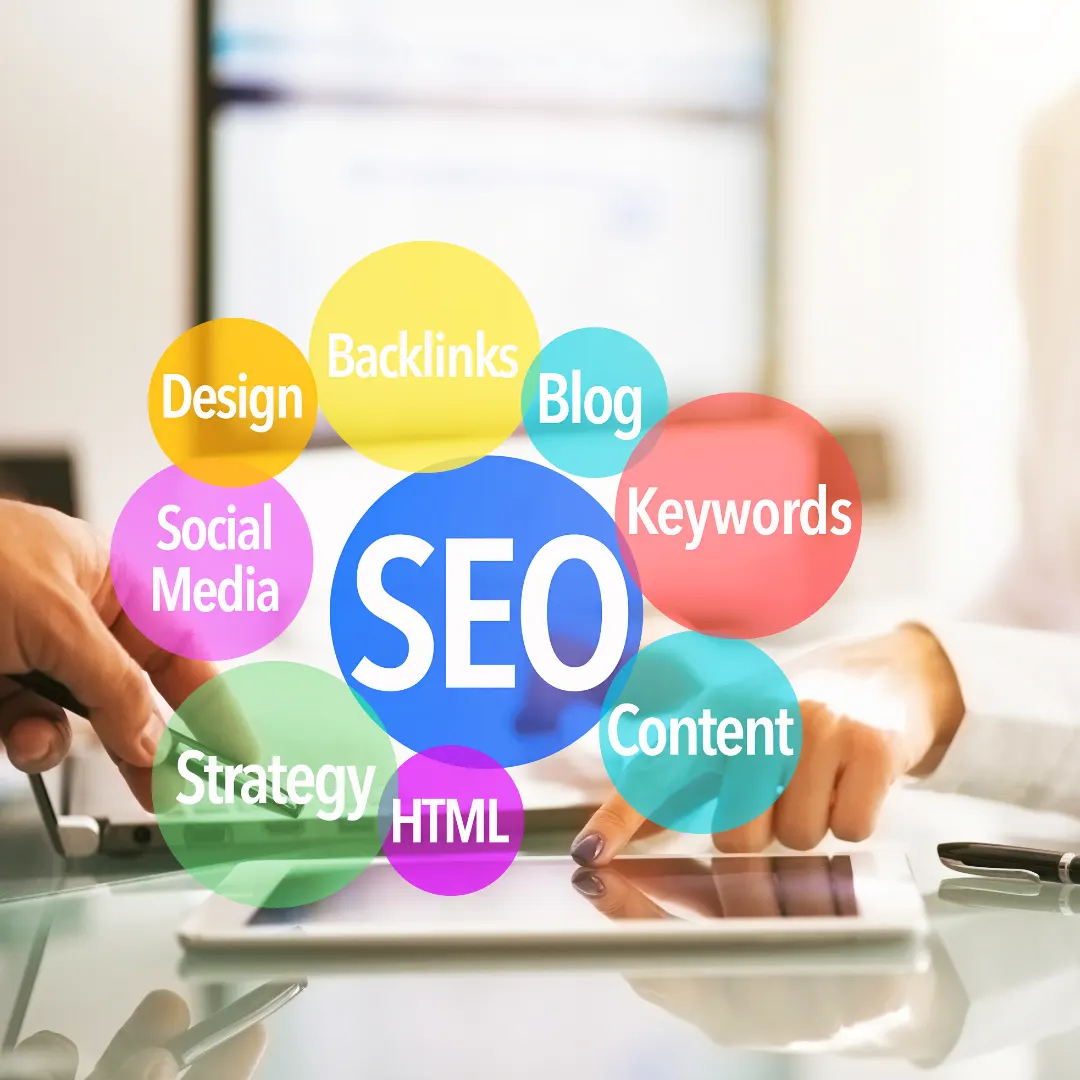

An agency specialized in SEO knows how to rank on the first page.

There is a shorter way to be on the first page, and that is Google advertising. However, you will be on the first page while paying, when you stop your place will be taken by someone else.

However, with SEO, the situation is reversed.

It takes a lot of work and patience in the beginning. However, after a few months, the results arrive and once you take a position, with a little maintenance, you can be on the first page for years.

In the long run, advertising always loses compared to SEO, and convincingly so!
Another important fact - Many people do not like ads on Google and trust organic search more.
That's why if you're thinking, we always advise our clients to do quality SEO first.
SEO is much more than website positioning. It ensures excellent content that is optimized and competitive, and will provide you with a website that will be understandable and easy for your visitors to navigate.
And all that results in more sales!
People think that a photo or video sells a product. However, that is only one part. By describing that product and its advantages, you will much more easily convince the visitor to buy your product or service.
With the combination of a good image and text, you are on the right track!
It is the most difficult solution, but in the long run it is also the best.
If there are shortcuts, we would be happy to reveal them to you!

If you hire an individual or agency for SEO, you will have more time to improve your business. SEO is difficult in the beginning, after that it follows a well-established path.

You should know which methods and strategies to apply and not waste time with peripheral matters.

An SEO master has knowledge and experience and knows how to set things up.

Very often, websites do not have a good structure, so people find it difficult to move from page to page and cannot find their way around. And that is one of the SEO jobs, how to make the website easy to use.

Because a bad structure loses the link juice that is at the top of the pyramid of your website. You're wasting your hard-earned power on some pages that don't mean much to you, while important pages have no power and can't rank well on Google regardless of everything being fine.

A good SEO company has its own team of designers and developers who will help make all of this happen.

We know what and how it can go, analysis is enough. You can have a good idea, but bring it to us so we can shape it.

With your help, the best results will be achieved!

Black hat / White hat SEO

As in any other industry, in SEO optimization you will come across different approaches to get the best results.

In this case, how best to optimize a website. Thus, in SEO there are two directions, two schools - Black hat and White hat. You can probably guess that one way is correct and the other is not.

Here we will briefly explain what and how these two directions work. Of course, we will also give you a few examples.

We will also mention Gray Hat SEO, which slips between them. This is a very important topic that you need to know something about so that you don't put your business at risk.

So let's go!

What is White hat?

In short, it is the correct and honest way to optimize a website for Google and other search engines.

It is based on three principles:

Sledi smernice koje Google preporučuje

Google ima svoja pravila koja bi trebali da se svi pridržavamo. On želi da posao bude pošteno odradjen i da posetioci dobiju pravu vrednost. Bez obzira da li je to lični blog ili e-commerce. Ukratko, ne smete biti manipulativni i morate raditi posao pošteno, a Google će Vas za trud nagraditi. Zato Google vodi računa da ne prevarite njegov algoritam.

Neka fokus bude na posetiocima

White hat traži sadržaj i promene koje mogu biti još korisnije posetiocima. Google ima prioritet da svojim korisnicimapruži što bolje iskustvo, pa zato njegov složeni algoritam na osnovu pretraga odredjuje ko treba i gde treba da se nalazi. Zato Google smatra da je White hat jedini ispravan način SEO optimizacije

Radite uvek na duge staze

Sve ove Google strategije se zasnivaju na tome da prečice ne postoje i da biste pružili dobar sadržaj neophodan je veliki trud i poznavanje teme o kojoj pišete. A to znači da će biti potrebno puno vremena i veliki budžet da se sve uradi kako treba. Ali sem dugoročne visoke pozicije, ovim pristupom se poboljšava korisničko iskustvo što dalje utiče na Vaš autoritet na mreži i povećanje prodaje

What is Black hat?

It is the opposite of White hat, which means that Google prohibits it, that is, punishes those who apply it.

Black hat is the other side of the coin and it has principles on which it is based, which are:

Krši Google pravila i smernice

Taktika u Black hat SEO metodi se potpuno razlikuje od White hat pristupa. On pokušava da prevari Google algoritam i da se za kratko vreme rangira što je više moguće.

Baziran je na metodama koje su manipulativne prirode

Black hat princip je da manipuliše Google algoritam kako bi on uspeo da pozicionira stranicu što bolje. To se neretko dešava jer postoje milioni web sajtova koji to rade. Google-u je teško da to otkrije, ali pre ili kasnije će to otkriti i kazniti Vas. On obmanjuje Google da je njegov sadržaj najbolji, iako je to daleko od istine.

Black hat fokus je meteorski rast.

Google nije savršen iako ima najbolji algoritam u odnosu na druge pretraživače. Upravo te rupe se koriste kako bi se prevario sistem. Google nekada ignoriše takve pojave do odredjenog trenutka. Nekada vrlo brzo banuje takve izvore. Black hat metoda dovodi vrlo brzo do visokih rezultat uz vrlo malo rada. One mogu trenutno da daju rezultat, ali je on kratkog veka.

Now you are probably wondering, what should we do?

Our advice is the same as in life - Be committed, work honestly and you will be rewarded!

There are no shortcuts to success online either. Even if you get away with something and manage to bypass the Google algorithm, you won't have the value that others can offer.

What is the difference between Black hat/ White hat SEO? Is Gray Hat SEO Good?


The main difference between these two techniques is in the way they work. White hat SEO respects Google's principles and rules, while Black hat SEO violates all of them.

Everyone's goal is to make money, the only question is which way is right?

The goals of both methods are the same, but the way to reach them is completely different.

In order to practically explain it to you, we will mention the techniques on which both methods are based.

We start with White hat SEO:

Guest Blogging.

To je pisanje tekstova ili neki drugi sadržaj koji se nalazi na nekom drugom web sajtu i na kome se nalazi veza do Vašeg web sajta. Na taj način dobijate backlink-ove (povratne veze).

Pisanje kvalitetnog sadržaja

Ovo je vrlo važno kako bi Google prepoznao vrednost u Vašem tekstu koja će pomoći posetiocima. Tekst mora biti originalan i razumljiv

Ispravke

Vrlo važno, kako bi Google dobio što bolje objašnjenje o čemu pišete na stranici. Naravno, pre započetog rada je potrebna detaljna analiza.

To je metoda stvaranja kvalitetnog sadržaja koji ima za cilj da dobijete backlink-ove. Da bi imali što bolje rezultate, pisci često pribegavaju kontraverznim naslovima

We continue with Black hat SEO techniques:

Cloaking

Ništa drugo nego prikrivanje sadržaja. Jedno se prikazuje pretraživaču, a sasvim drugo korisnicima

Dodavanje ključnih riječi

Ovo je bilo jako popularno do pre 10-ak godina. Radi se tako što ključnu reč ponovite bezbroj puta na stranici. A često je bilo nevidljivo posetiocima

Skriveni tekst

Tehnika gde posetilac ne vidi tekst koji Google bot vidi. Tehnika od koje možete samo dobiti kaznu

Kopiranje sadržaja

Ovo je način kako najkraćim putem doći do kvalitetnog teksta. Medjutim Google ingnoriše sadržaj koji je on već indeksirao, a prekopiran je kasnije na neki drugi web sajt

We have mentioned only a few techniques, but there are many more. We promise to make one article only on this topic.

Let's not forget Grey hat SEO.

You can guess what it is about. This technique is not mentioned that often. It is between Black hat and White hat SEO and takes the best of both worlds. It uses more techniques than the Black Hat method, but within limits to avoid a possible manual penalty.

And that's the worst thing that can happen to a website. Google simply removes you from the search.

There is an option to go back, but Google is very strict about this.

You have to know that something Google tolerates today doesn't mean it will be like that forever. Bad things just happen in some Google update and you simply disappear.

When you do it right, things like this can never be so radical.

This is exactly what Grey Hat SEO relies on.

If you don't work according to Google's guidelines, two things can happen: By updating the Google algorithm, you simply disappear, or even worse, you get a manual penalty from Google!

The first significant update in this regard happened in 2012 under the name "Penguin". .
On that occasion, many websites were removed that Google determined were using manipulative methods in order to achieve the best possible position.
Google continued on that path and that's why our advice is not to use Black hat SEO techniques because it's only a matter of time before you get the bill for it!

Conclusion

We hope that through this text you have learned something that you did not know. We tried to explain some basics in SEO, but you have to understand that SEO is much more complex. Of course, there will be new articles where we will go even deeper into a topic.

With every Google Core Update, things in SEO change a little bit.

That's why it's important to follow the Core Google Update! They are the most important for us and the changes are then for everyone. But don't worry, they are not that frequent and happen a couple of times a year.

Be sure to research On Page and Off Page SEO. Read some of the Black hat/White hat SEO debates to help you decide which way to go.

SEO is the most important thing after creating a website. The sooner you understand this, the easier it will be for your website to progress to the first page of Google. Be sure that people whose websites are highly ranked know what SEO is.

Research SEO whether you're going to do it yourself or hire a professional to do it for you!

That way you will get answers to some questions. In digital business, visibility is everything if you want to get ahead. The time will come very soon (for some niches it has already come), when you will not exist if you are not on the search engines. InStore sales are still a much stronger segment of the business, but be aware that this is also changing.

Imagine how it was 10 years ago and try to imagine how it will be in 10 years?

If you have a website, take advantage of the opportunities provided by SEO. It is a long-term job and from our experience we can say that the results are always visible. You have to be patient because it takes at least a few months for the results, but know that Google always rewards those who provide good content!

We have suggested a couple of tools that we also use in our work. There are a lot of good tools, so that will be one of our next topics.

Use them because they can help you a lot in your work. You must understand that the competition on the Internet is huge and that what you are planning to start, someone has already been doing for a long time. But keep in mind that with good work you can overtake almost all competition!

SEO is not just a recommendation to increase your business, SEO is necessary if you want someone to find you on Google.

Today, almost all people in Serbia use the Internet and online traffic will increase from year to year. So be wise and optimize your website!

Be ready for what's coming.

If you don't have time to learn about it, but still want to optimize your website for search engines, give us a call!

You can write us an email at info@smartthink.rs or visit our contact page www.smartthink.rs/kontakt/

For more information on how we can help you, visit our website www.smartthink.rs

In addition to web site optimization for search engines, our specialty is web site development and Google Ads advertising. In any case, we will be glad if you call us and we can help you.